WILD Cambodia:
A Ride Through Chaos, Beauty, and the Unexpected 🇰🇭
A Ride Through Chaos, Beauty, and the Unexpected 🇰🇭
Phnom Penh, the chaos of mopeds and tuk-tuks, the thick heat pressing in. Three flights, a tangled mess of layovers, and now—finally—Cambodia. A last great ride before life changes forever. The hunt for bikes, the roar of engines, the dust of forgotten roads. Racing down Pol Pot’s abandoned airstrip, getting lost in the jungle, pushing deeper into the unknown. A journey on two wheels, raw and real. Adventure waits. The only question—how far will it take us?
Bustling Streets in Phnom Penh
Three exhausting flights—Vienna, Zurich, Bangkok—then the final leg to Phnom Penh. A secret weighs heavy, the knowledge that I’d soon become a father. My last adventure for a while? The airline has botched my ticket, but that’s part of it. The moment you step into the unknown, you relinquish control. Adventure calls. An hour more, then I’m free.
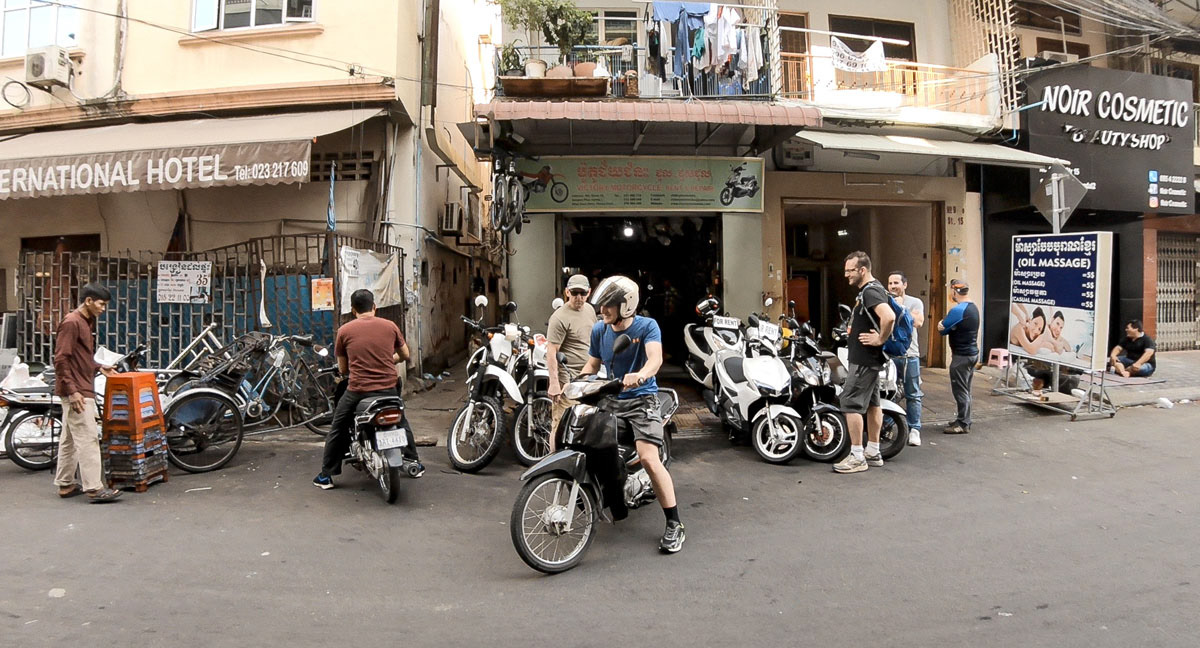
Phnom Penh. I’ve made it. My bag arrives intact, my SIM card works, my visa’s sorted, and I survive a tuk-tuk ride into the madness. The hostel is hidden in a narrow alley, the chaotic pulse of Southeast Asia alive around me. Mopeds weave suicidally through traffic, horns wailing in protest. The heat clings to me, thick and relentless—a warning of what’s to come.
I dodge death long enough to meet Eliot from England and Evan from California—good guys. We eat on the rooftop of the Palace Garden Hotel, but I feel underdressed. Navigating Phnom Penh at night is a test of nerves. No streetlights. No rules. Just a river of metal and motion. A ten-lane roundabout with no pedestrian crossings. Back at the hostel, I sip a gin and tonic, listening to the geckos chirp. A slow, indulgent start.
The Hunt for Bikes
I sleep like a rock—surprising, really—thank God for earplugs. Breakfast at 10:00, and by noon, Eliot, Evan, and I head to the Royal Palace. The palace is underwhelming, but our guide is kind. We drink some beer and meet a Canadian Trump fan. Luckily, I barely catch any of his rambling. My mind drifts to my unborn child—there’s a tinge of sadness, but the moment I’m on the bike, out of the city, everything falls into place.
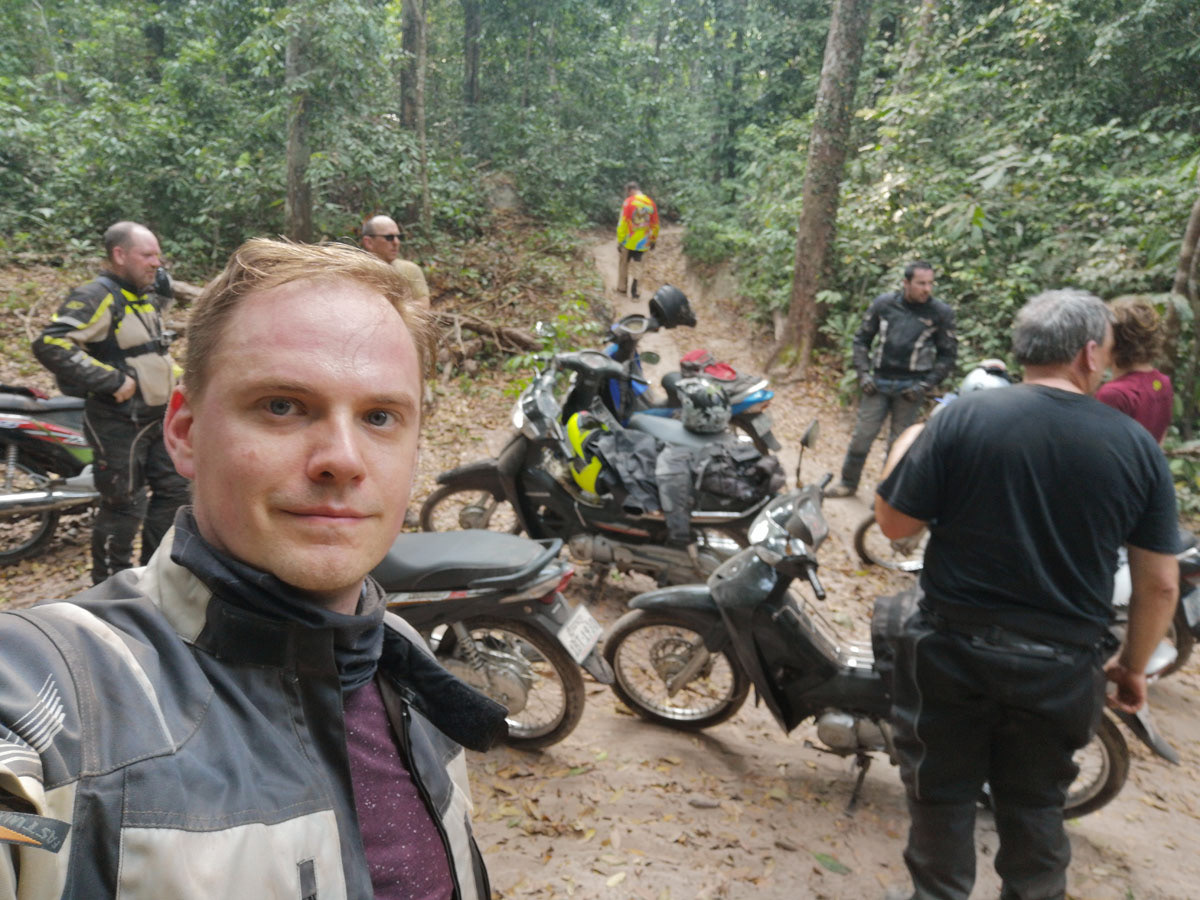
We head into a rougher part of town. Dimly lit massage parlors, bars full of scantily clad Cambodian women and fat old European men. But in between, there are decent spots too. At the meeting hotel, I bump into John and Paul from England, and Rolf from Germany. Ed from C90 Adventures arrives, and the crew’s complete. We head out to find bikes. A test ride around the bustling market. The brakes are awful, but hey—front drum brakes. What can you expect? We eat together at some street stalls at the chaotic market, a few beers, watching the street life unfold.
Our last day in Phnom Penh, we head to the Russian Market—packed, kitschy souvenirs, but there’s a fun corner for motorcycle parts. I grab two sweet pineapples for $1 and a coconut for $0.50.
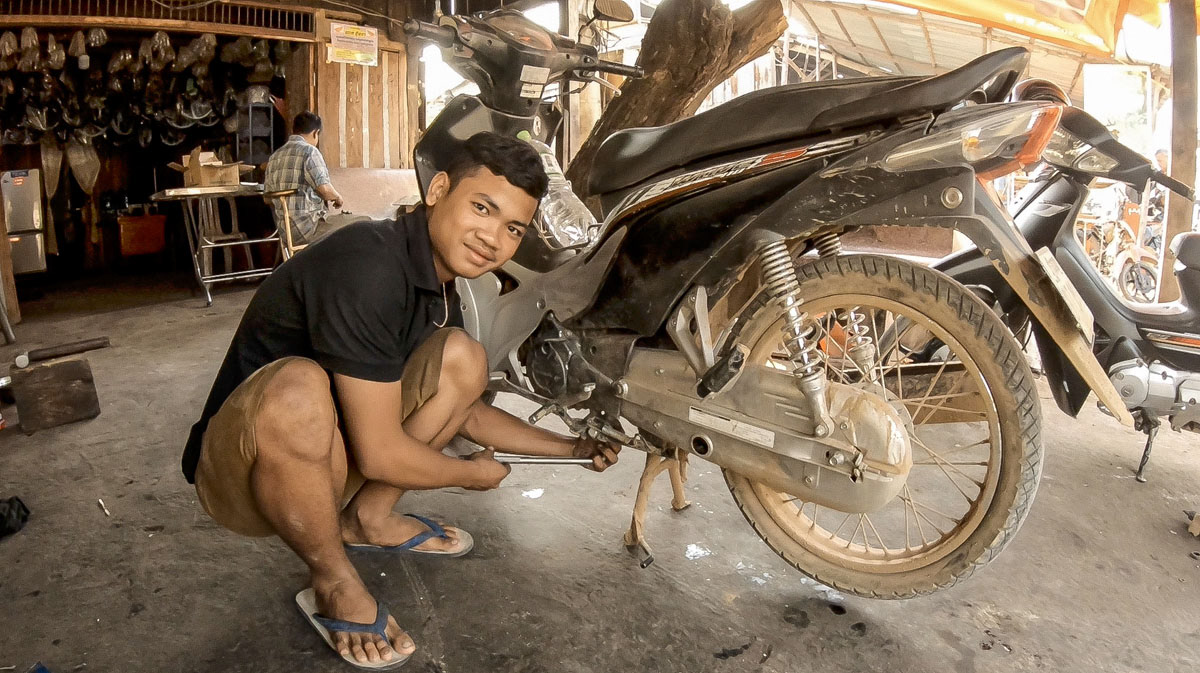
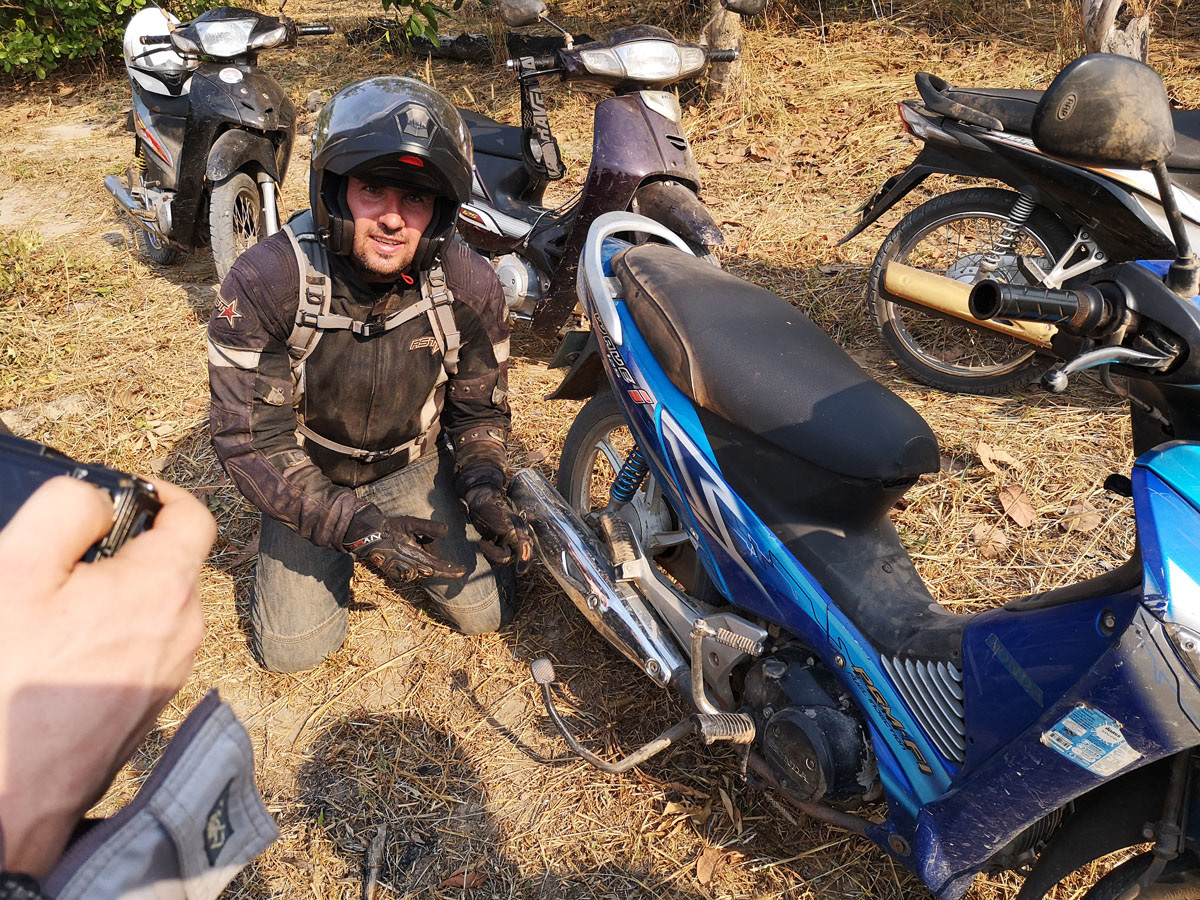
The hunt for bikes continues. Most are junk—bald tires, oil leaks, brakes that barely exist. We negotiate, tinker. We test, buy parts from the market, and fix what we can. The go-to tools here are a screwdriver and a hammer. I don’t want to jinx it, but my little Honda looks decent. Nothing is perfect, but this isn’t about perfect. A friend gets all his money stolen during a massage. A lesson learned. I pack my saddlebags, the essentials only. In the morning, we leave.
Pol Pot’s unused Airfield
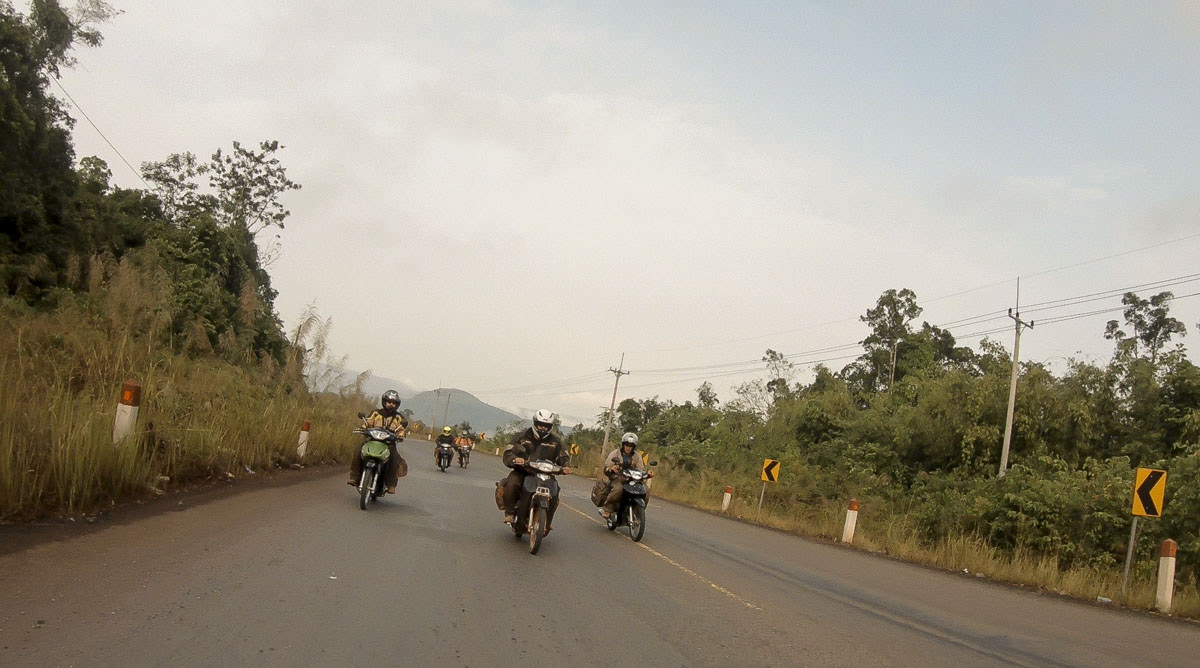
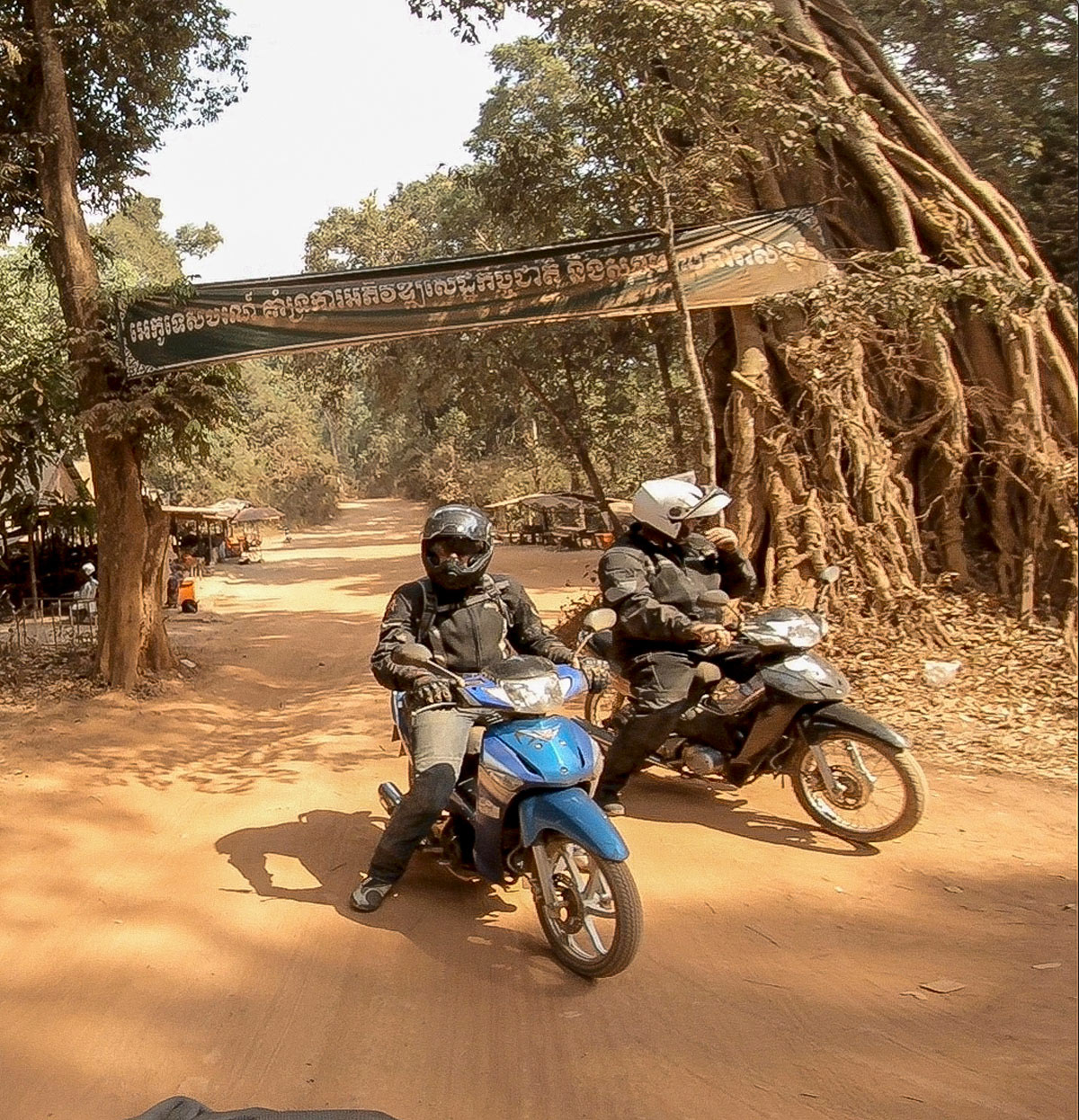
We roll out by 8:30, Phnom Penh swallowed by heat and haze behind us. The bikes hold strong, saddlebags steady, and we stop briefly by the side of the road. The air’s thick with dust, the sun relentless. We ride on toward Pol Pot’s abandoned airstrip—never used, just sitting there. We race down the tarmac like kids, the wind sharp in our faces. Starving, we try to find food, but nothing decent shows itself.
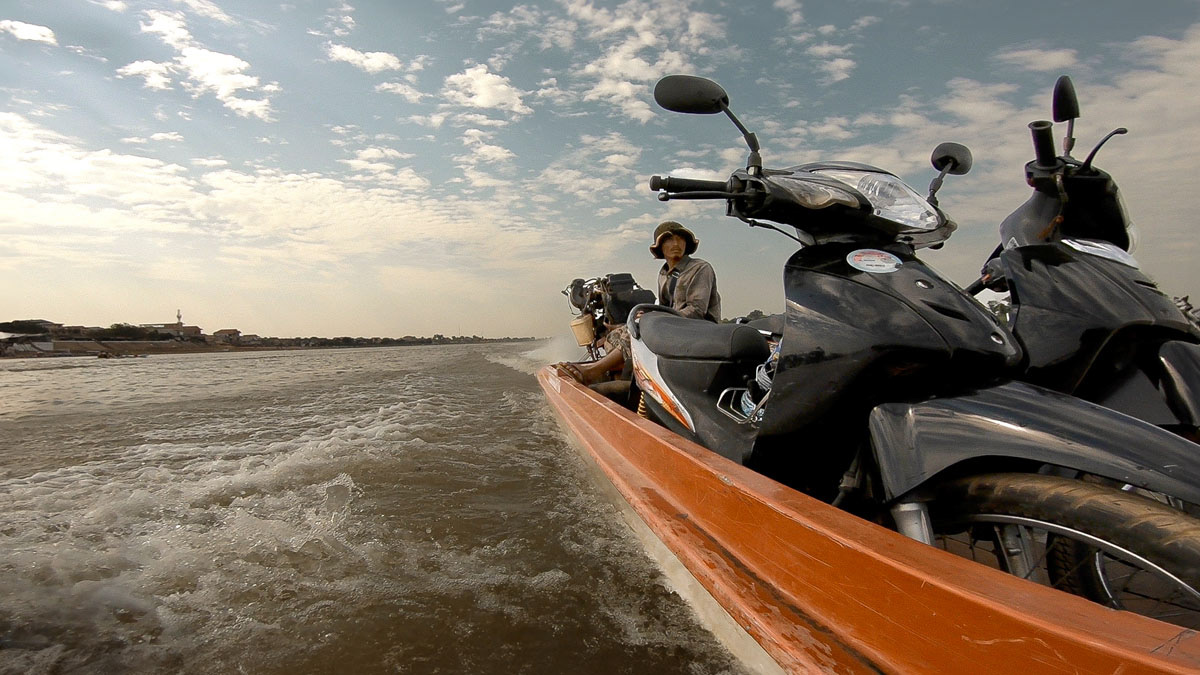
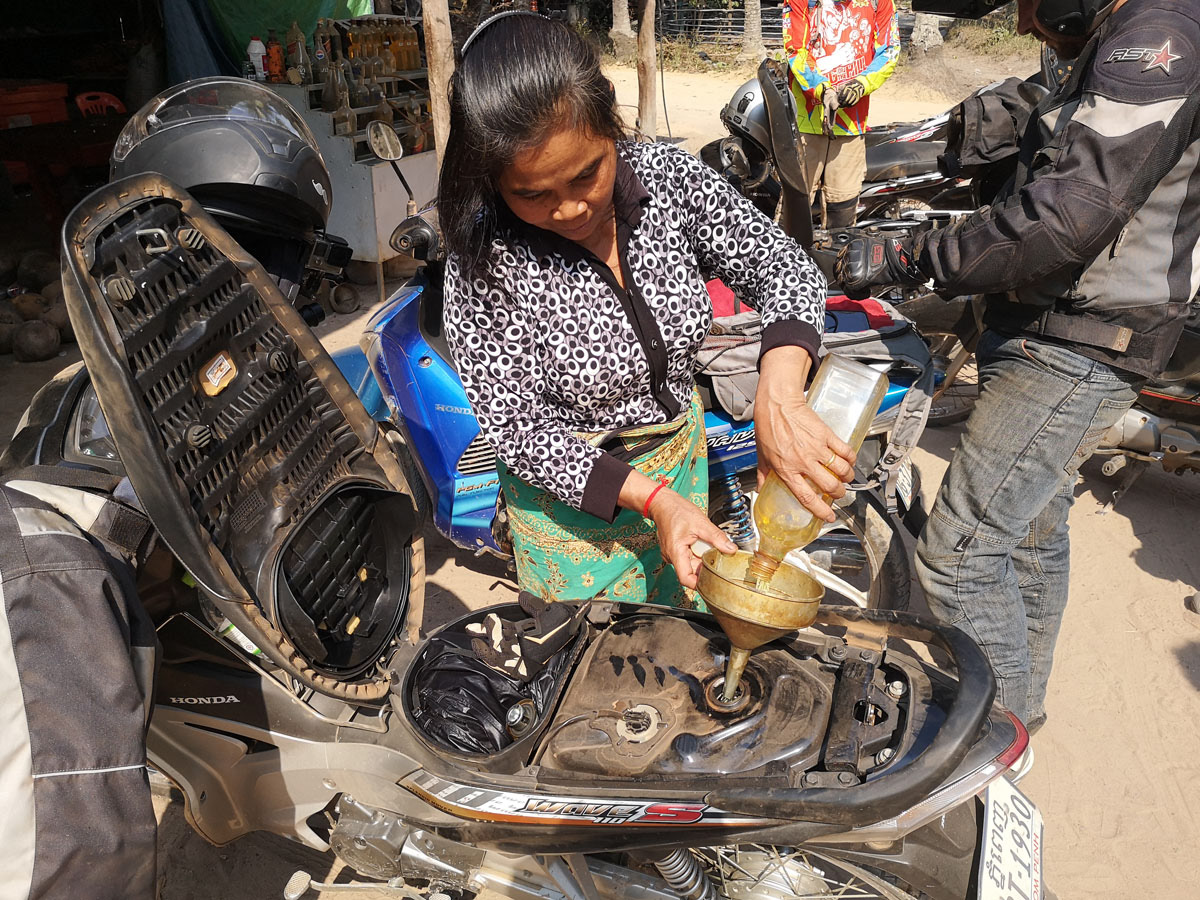
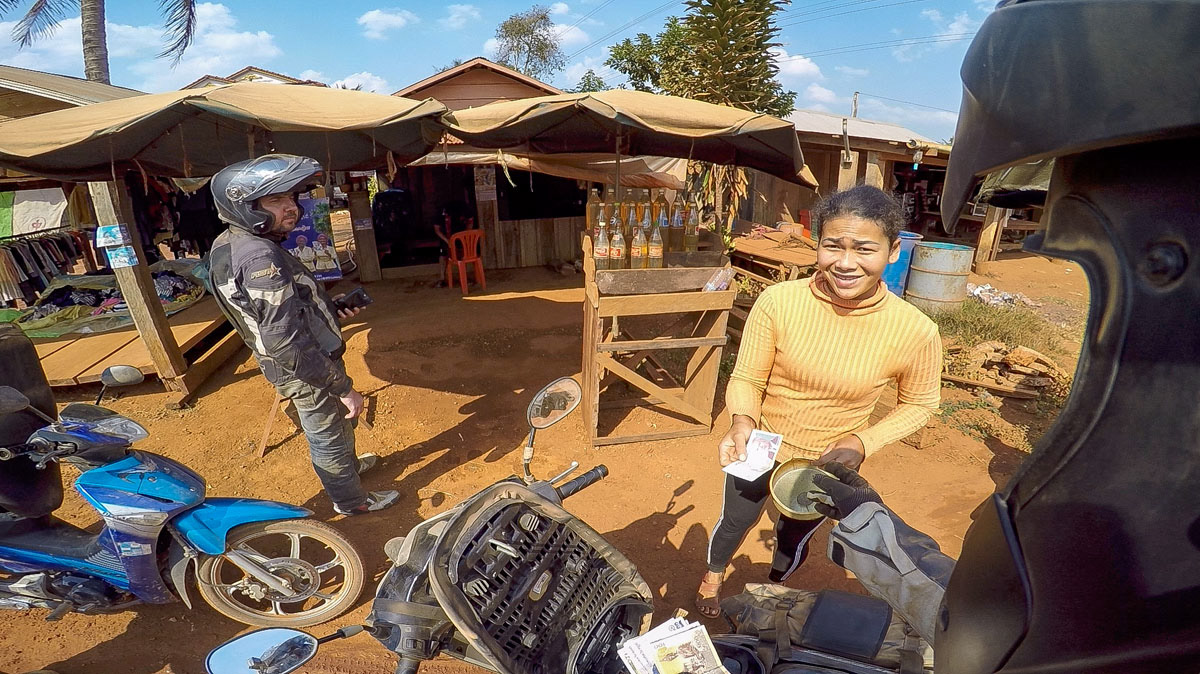
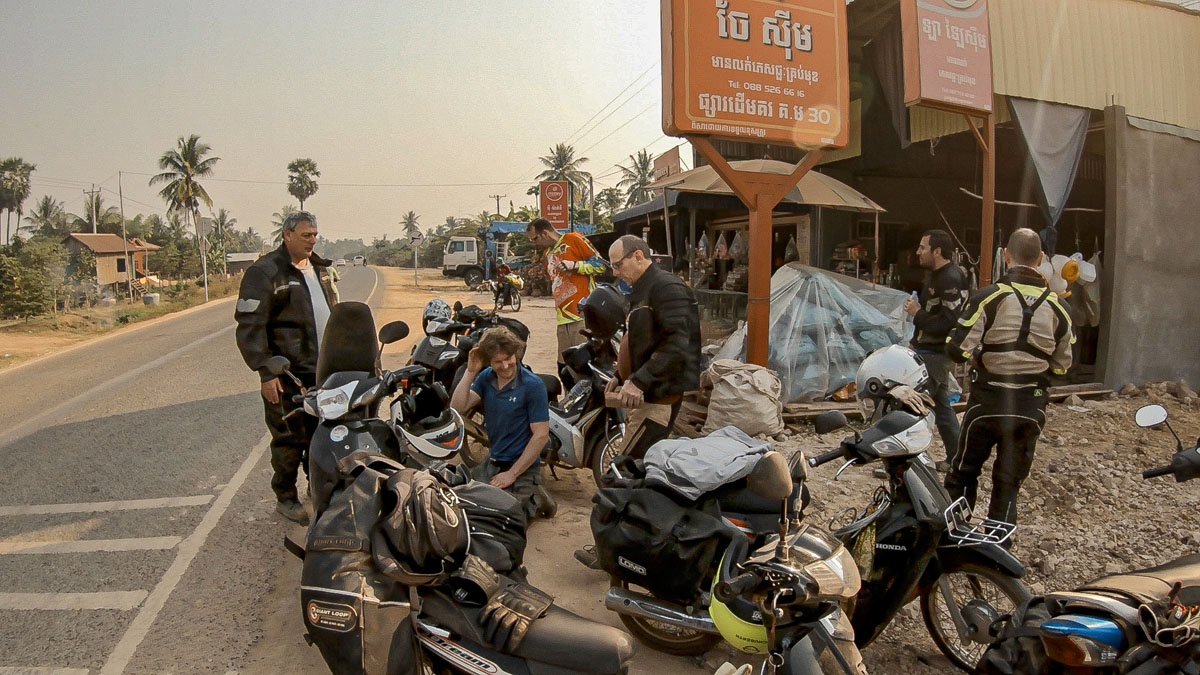
We miss the ferry over the Tonle Sap, and in a moment of madness, load the bikes onto speedboats. I don’t trust them, but the crew knows their job—they’ve done it before. The first flat tire—a minor setback. Fixed fast by a local mechanic. We fill up from bottles, the heat gnawing, hunger digging deeper.
We ride until a quiet refuge appears in the vast emptiness. No one speaks a word of English. We don’t speak Khmer. Communication by smiles only. We order seven Lok Laks with beef and rice. Salt and spice—enough to make everything right.
The journey continues—long stretches of dirt roads, sudden surprises: potholes, stray chickens, reckless drivers. A snap decision, a feathered casualty, and I keep riding.
Night falls, and we arrive in Kampong Thom. Finding a hotel is a struggle. My gear is dust, my skin smells of earth. We find a simple hotel, but it has beds, a shower—what we need. We eat Korean barbecue, the smoke thick in the air. The baby’s checkup news comes through. The ultrasound looks great. Relief. Happiness. This world will be his too, someday.
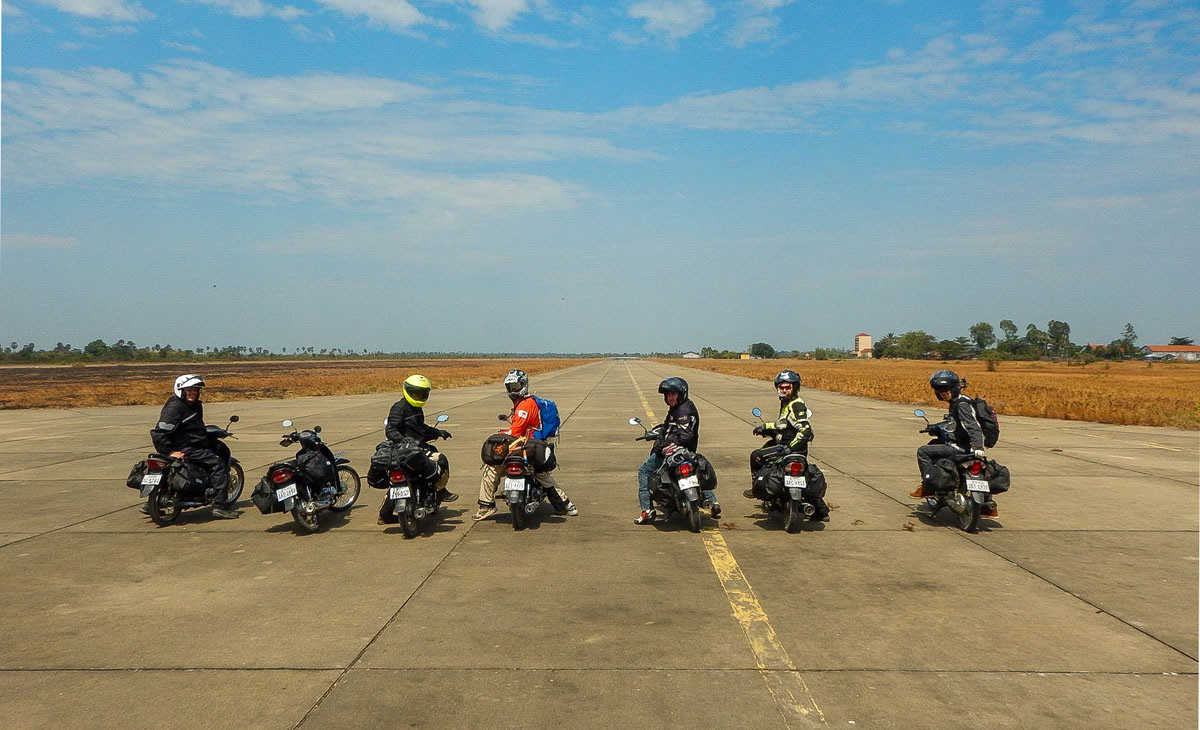
Pol Pot‘s Airfield
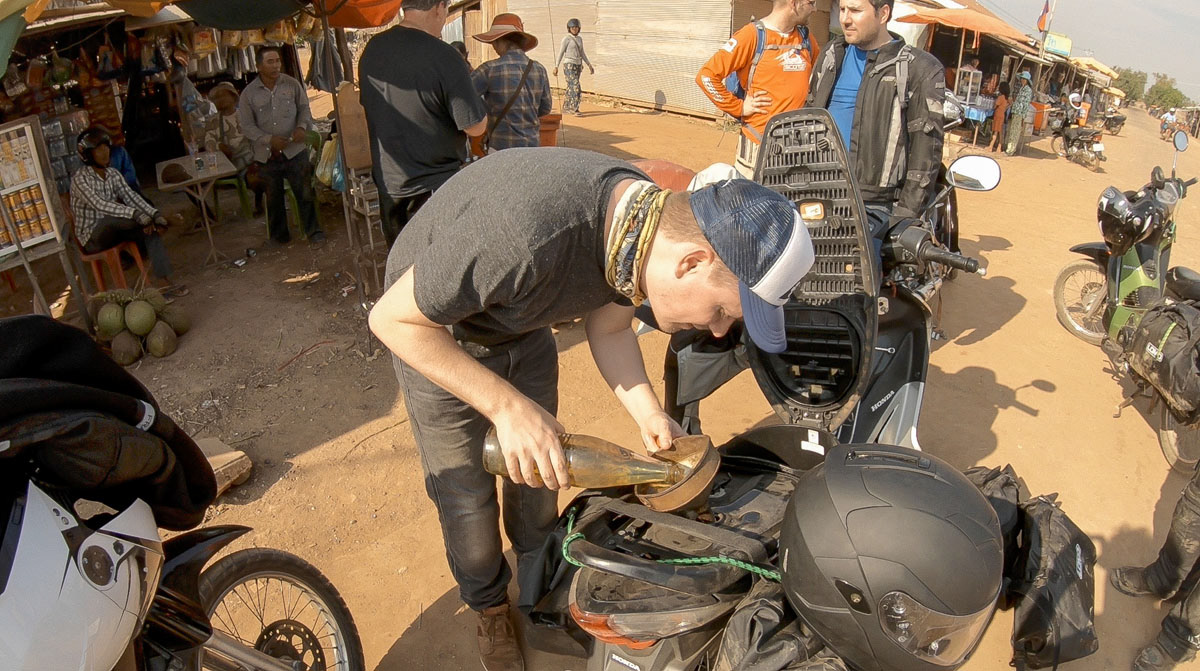
Bottle Gas
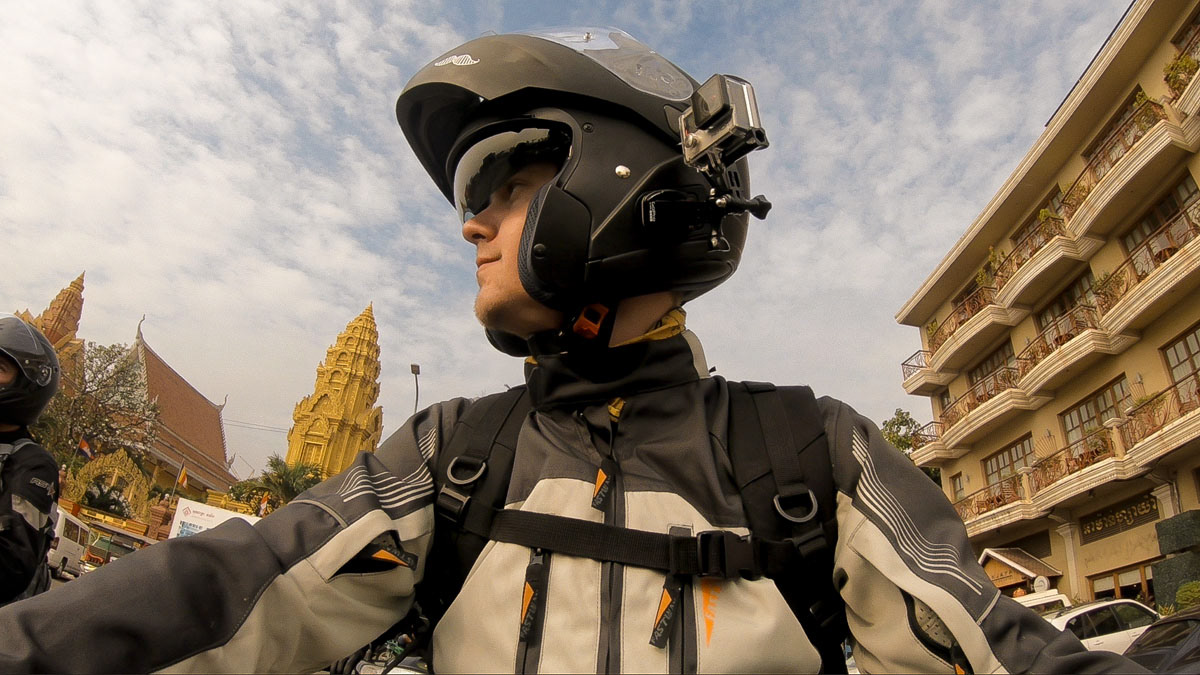
Start in Phnom Penh
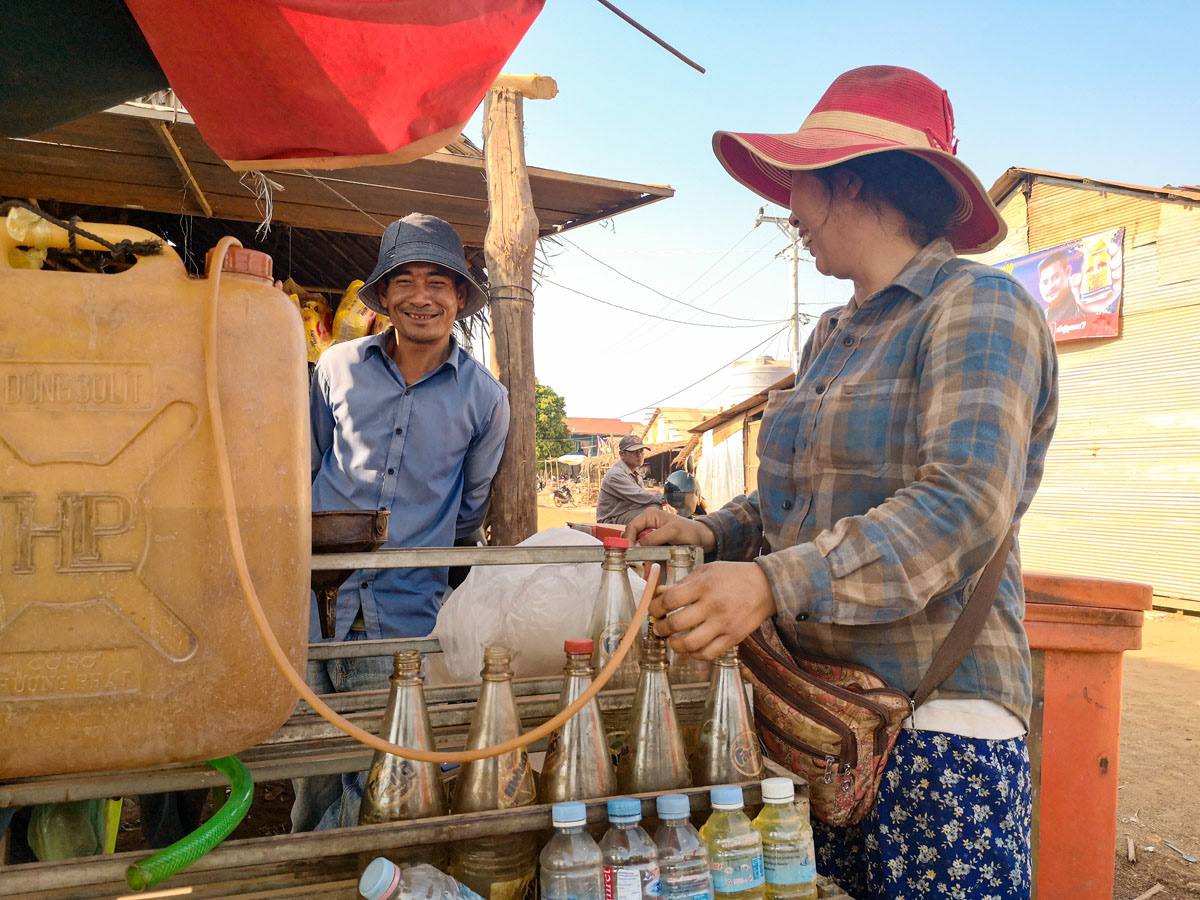
Gas Station
The Temples of Angkor Wat
Morning again. Another 8 a.m. departure. The bike sputters, but it keeps going. Oil leaks from places it shouldn’t, a misaligned wheel, and the gas tank barely holds enough to get me to the next station. But I love it.
We pass through villages, slowing as children run to the roadside to wave. A man invites me into his garden, offers tea, speaks flawless English. There's something about these people—they make you feel like you belong.
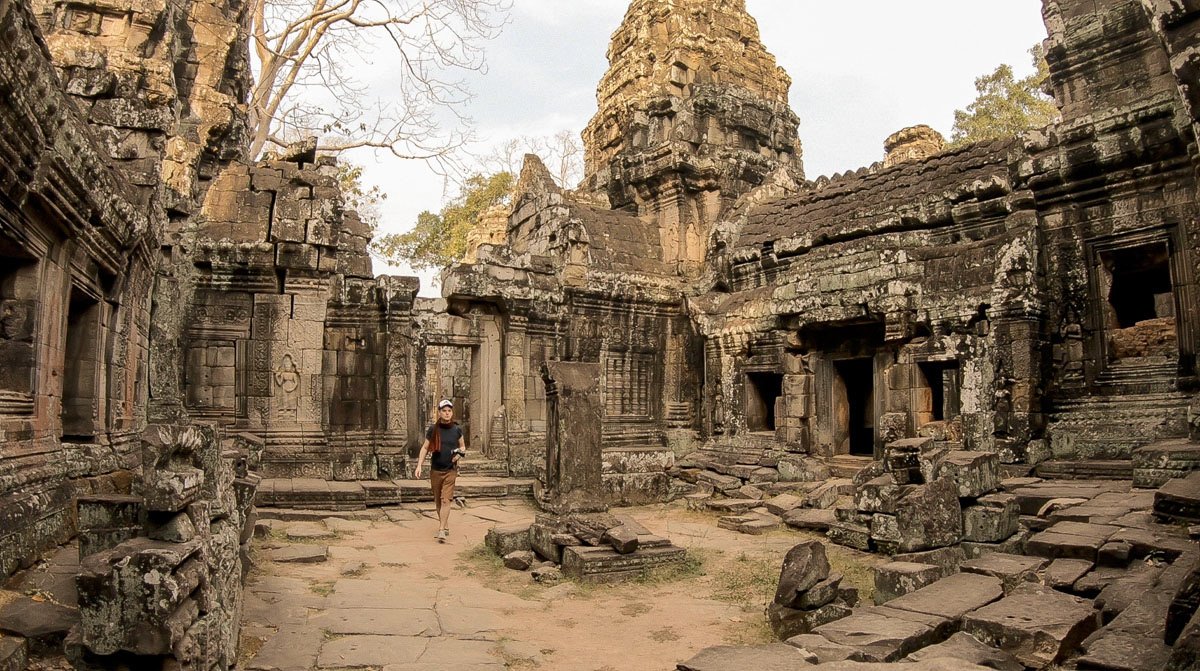
We roll into Siem Reap, the gateway to the ancient temples of Angkor Wat. The hotel’s decent, with a pool to cool off in. This is my third time here. Siem Reap’s changed—more concrete, less charm—but the pulse of the place is still there. The old magic lingers, like a quiet hum beneath the noise.
The next morning, we’re up far too early, chasing the rising sun toward Angkor Wat. The grand temple’s lost some of its luster, especially with the plastic pontoon bridge in place. But the hidden temples? They still whisper their secrets. The heat is suffocating, but I don’t mind.
By afternoon, I head back to the city, tired but content.
The talk about engines and so-called “happy endings” irritates me. Everyone’s polite, but the conversations lack depth.
I can’t connect with it. I’m an outsider here, among the Instagram wanderers, wearing their “I was in Thailand” pants and the same recycled tattoos. I don’t fit in with them. I’m not here for validation or approval. I’m here for something else, something that can’t be captured in a post.
Lost in the Jungle at Kulen Mountain
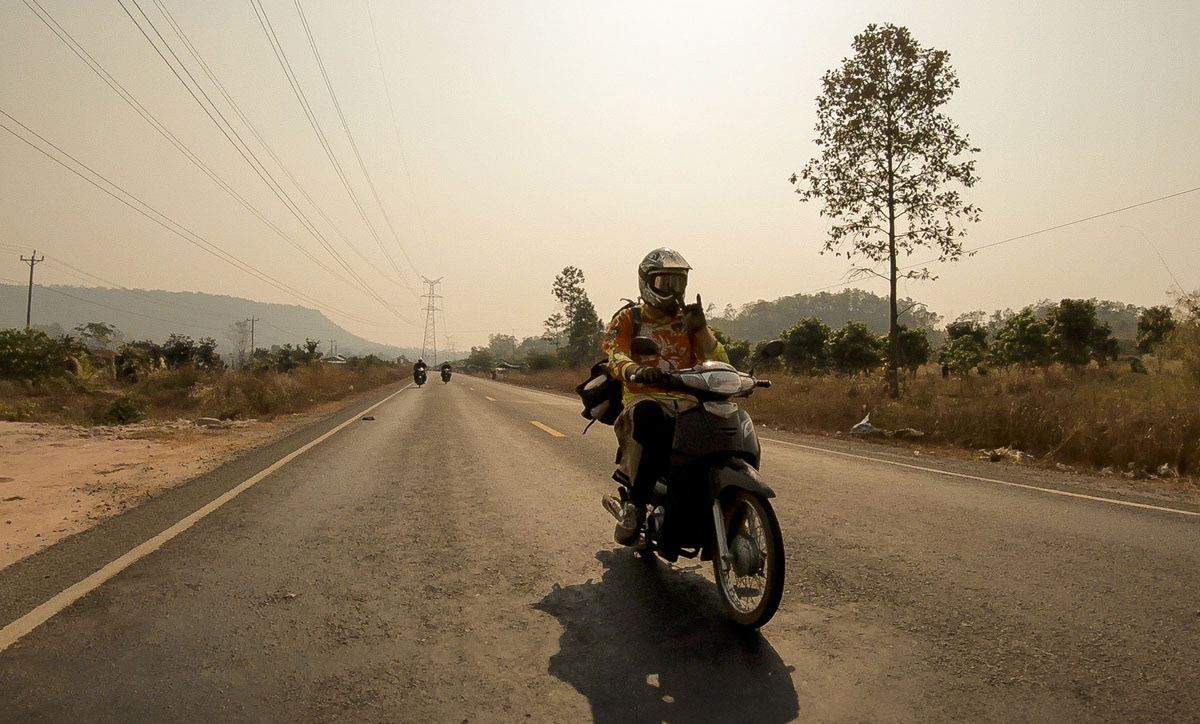
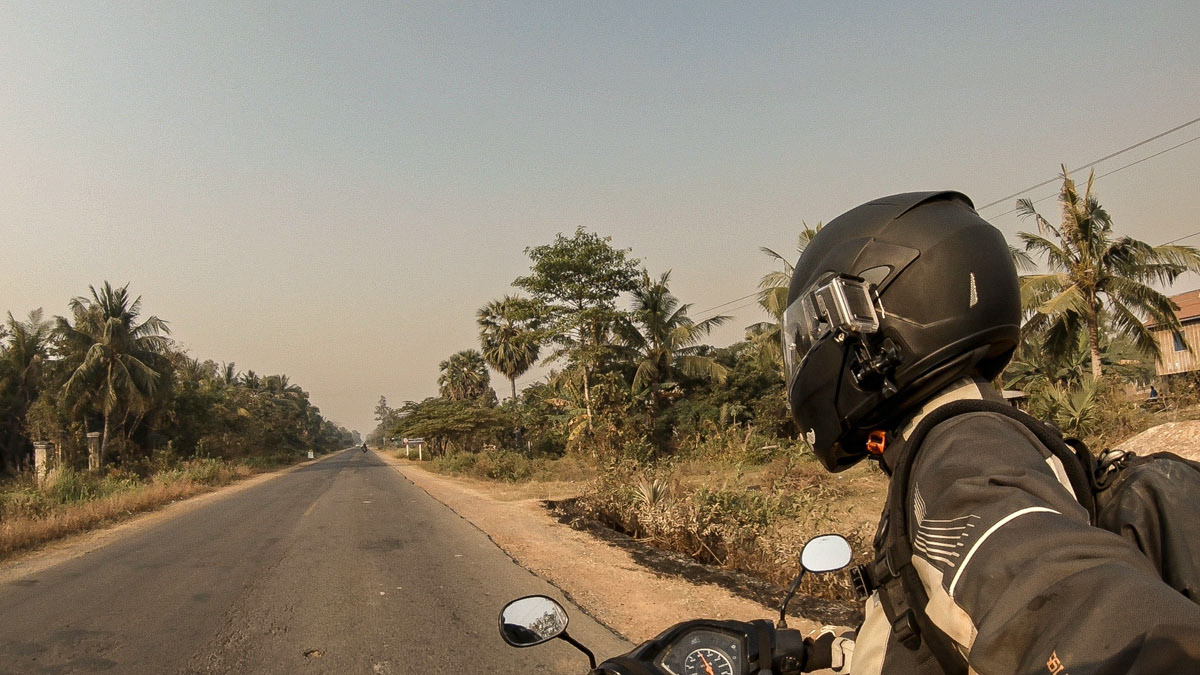
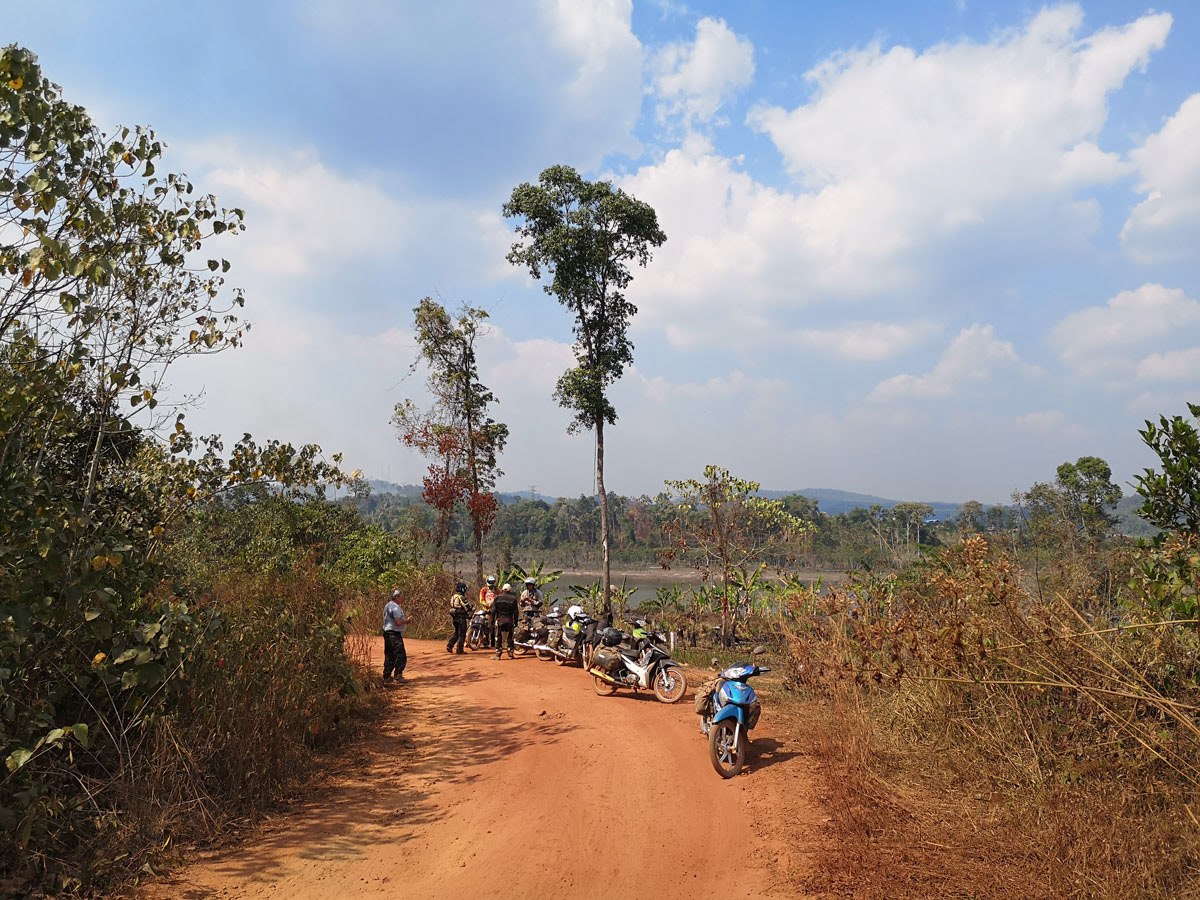
Seventy kilometers into the jungle. The stretch to the Kulen Mountains is already an adventure—winding paved roads through rice fields, occasional palms, trees, and a lorry filled with waving school kids. The heat hits us early. We left our bags behind at the hotel, and our Hondas can stretch their legs, pushing their 10 horsepower to the limit. We pay our toll into the Phnom Kulen National Park, then roar up the dusty roads, savoring the view. The path narrows, twisting, and our bikes struggle up the mountain, rattling on gravel roads between enormous rocks that seem like they’ve been placed there by some mythical giant just for us. Potholes shake us to the bone, but we push on. We finally reach the waterfalls, park the bikes, and cool off. At this point, we think the adventure for the day is done. I briefly consider buying a wooden carved penis slingshot.
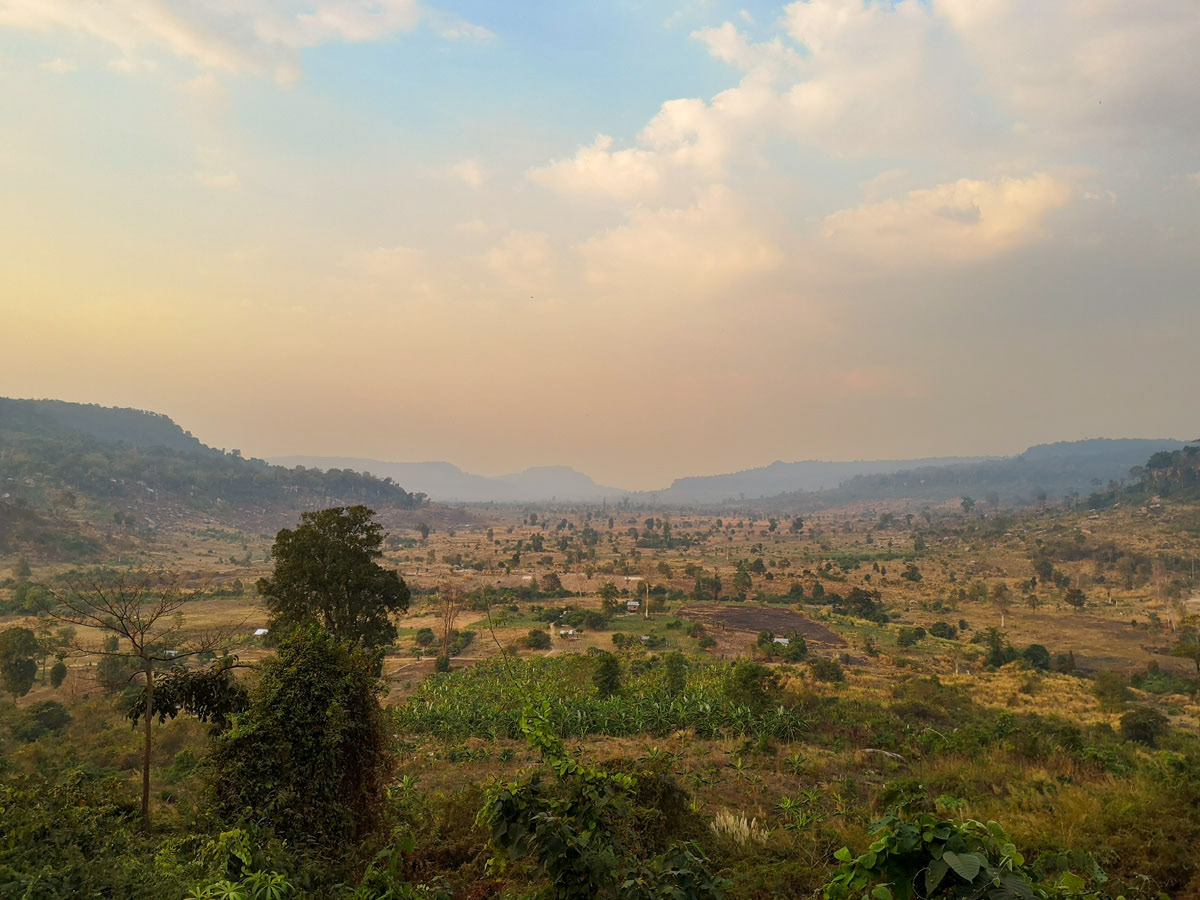
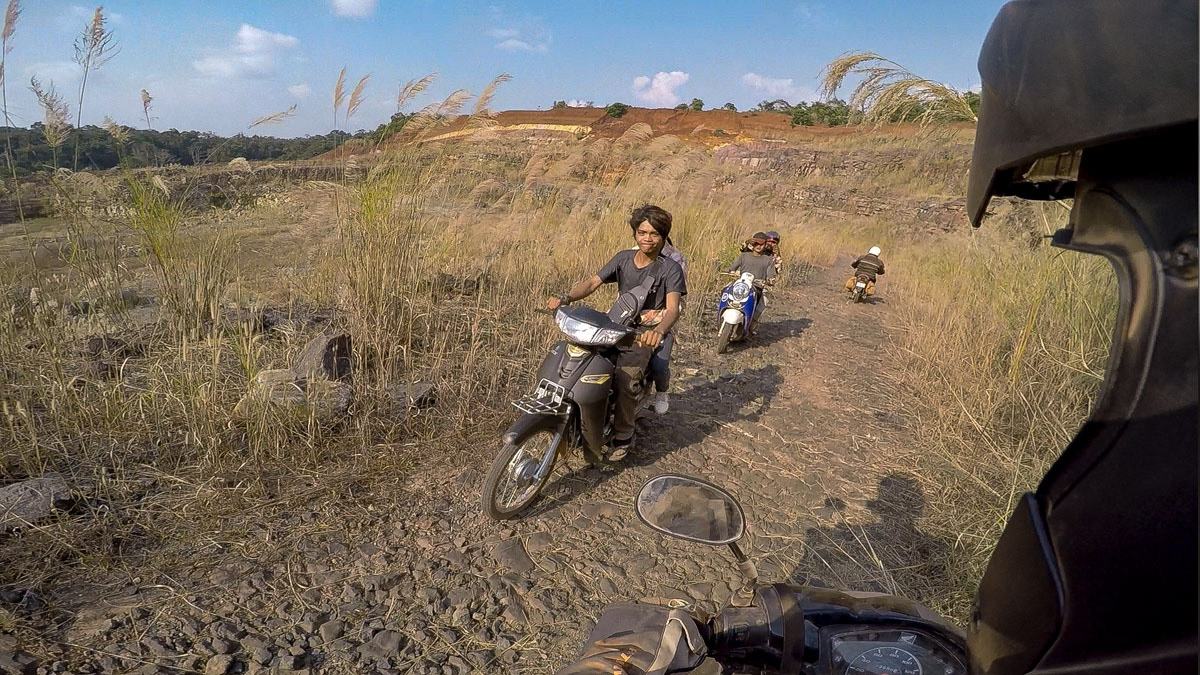
But the caves and temples higher in the mountains call to us. From there, everything changes. The path disappears into sand and untamed terrain. The jungle swallows our bikes, and the wilderness closes in. It’s exhausting, but it feels right. Time and distance blur. Somewhere along the way, we veer off course, lost in the immensity of it all. The sun beats down mercilessly.
We race through the jungle, but somehow, a family of four on a Honda seems to be moving faster than us. Our muscles ache, and the water’s long gone. The paths we’re on aren’t even on the map anymore. One by one, our Hondas lose parts—screw by screw. The fuel needle dips closer to empty. There’s something about mines, something I remember—don’t stray from the path. It’s a warning that feels distant, almost forgotten. But now, it’s real. We have no choice but to push on. Hours pass. The bikes rattle. Somehow, we find our way back. Relief tastes bitter. Temples and caves? We haven’t found them, but we found something better.
We reach camp, sweaty, exhausted. Showers. Food. Tomorrow is unknown. In eight hours, we’ll be on the move again.
Into the heart of Darkness, up the Tonle Sap River
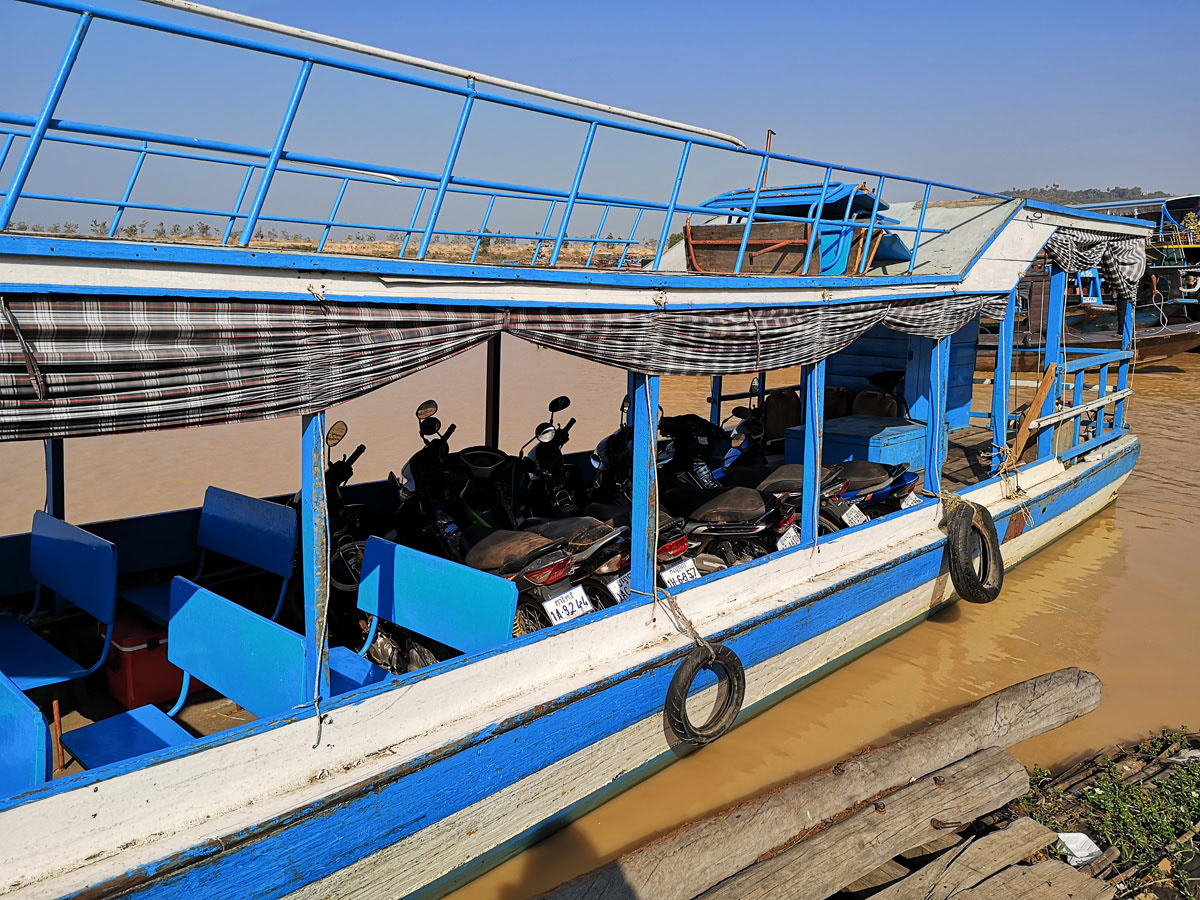
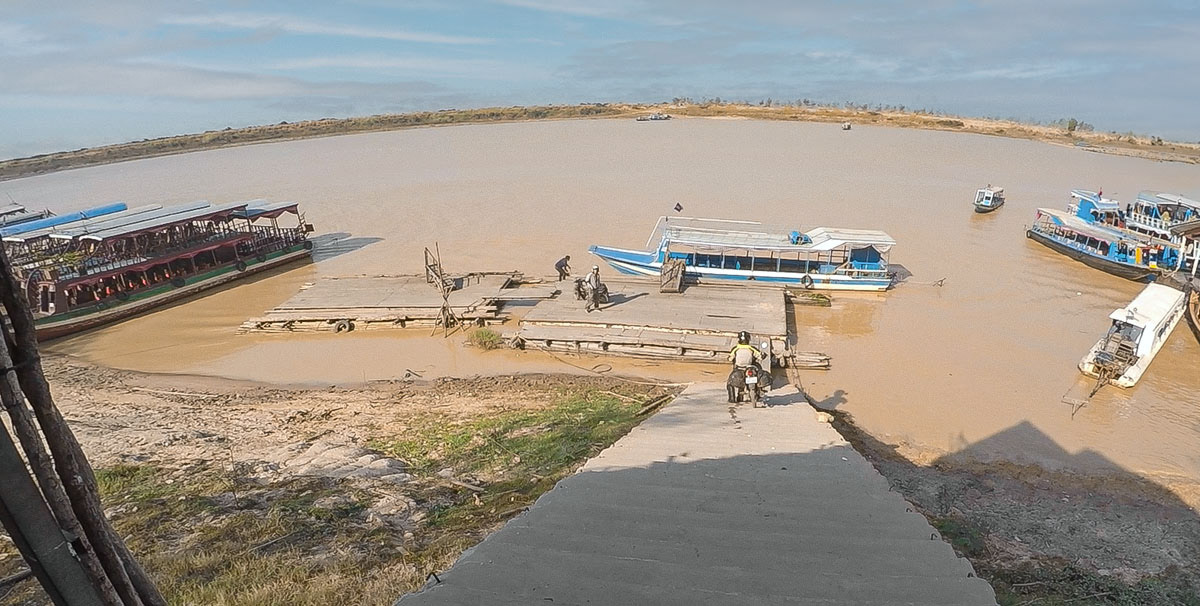
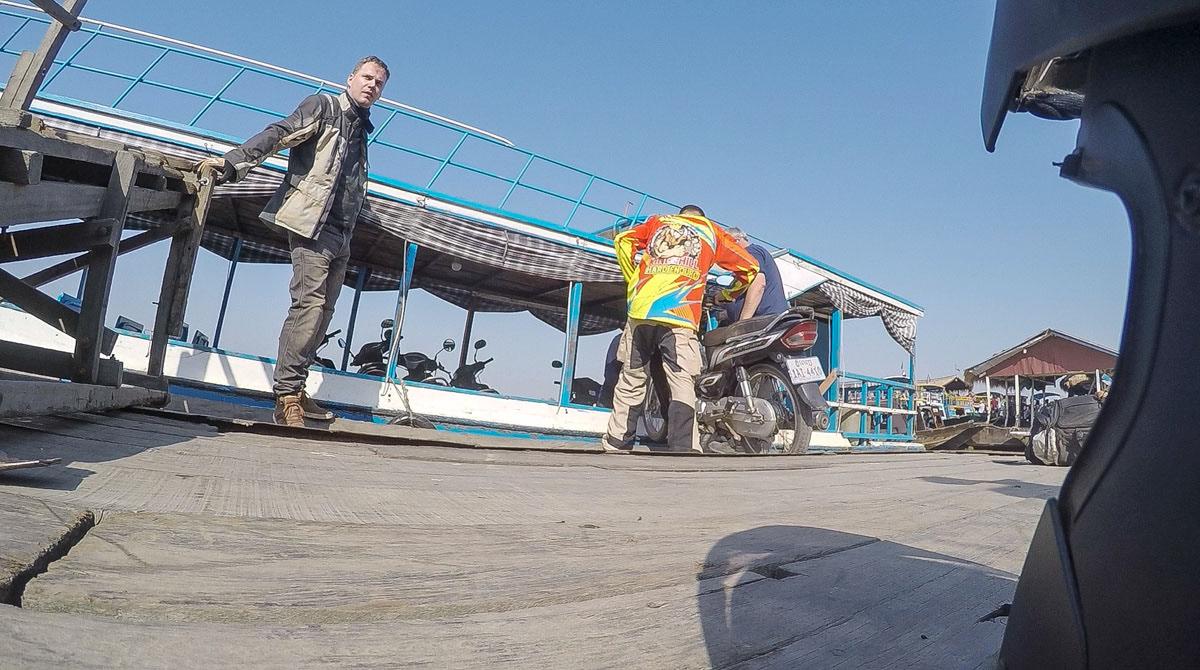
We head to the Tonle Sap River, eager for the next leg of the journey. The boat’s ours for the taking, and we haul our bikes up a steep, narrow ramp—an awkward, rattling procession. The loading feels like an event all its own. This leaky, squeaking hull was never meant to carry bikes. Three of us hold the boat steady while the others hoist the bikes inside. Without much delay, we set off, making our way up the Tonle Sap as far as the low water level will allow. There’s no real destination in mind. I think of Heart of Darkness by Joseph Conrad. Eventually, the shoreline disappears, and the Tonle Sap feels like a muddy, brown sea.
At one point, a fire breaks out inside the boat, dangerously close to two massive diesel canisters. The smell of fuel is thick, but the captain remains calm, quickly putting out the flames. We press on.
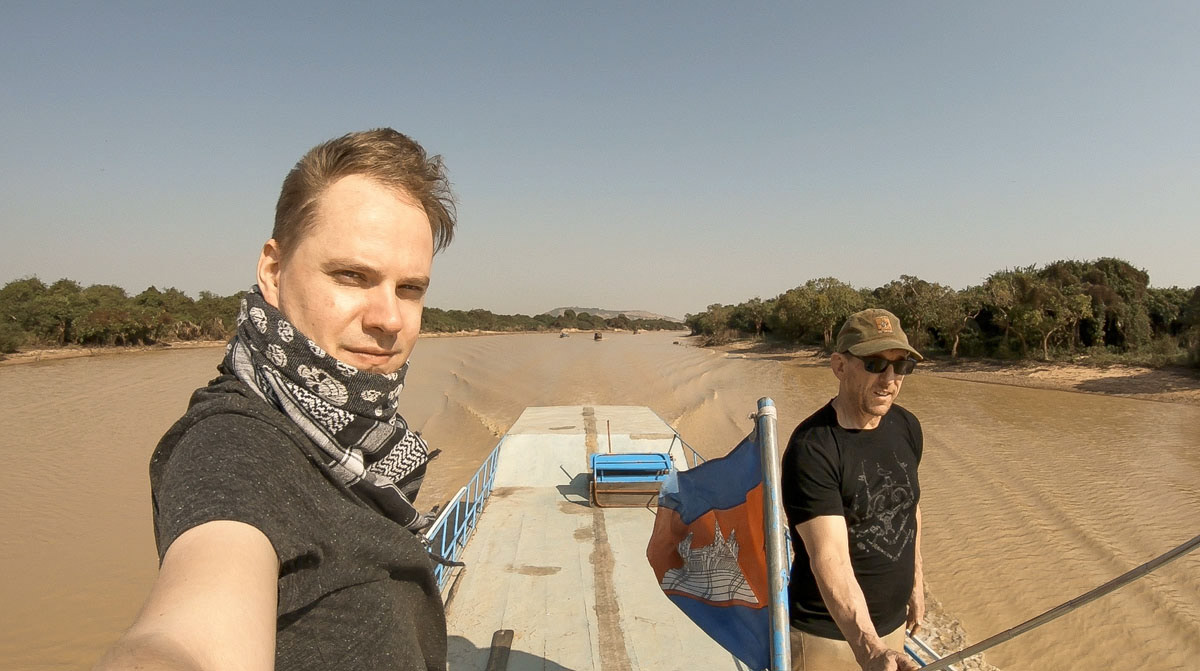
We reach the mouth of the Sanker River, which winds for miles, curving left, then right, through the landscape. The boat chugs along, passing fishing stations and floating villages where children wave at us from their canoes. For hours, we follow the river’s path, occasionally scraping over the shallow ground. We won’t get much further.
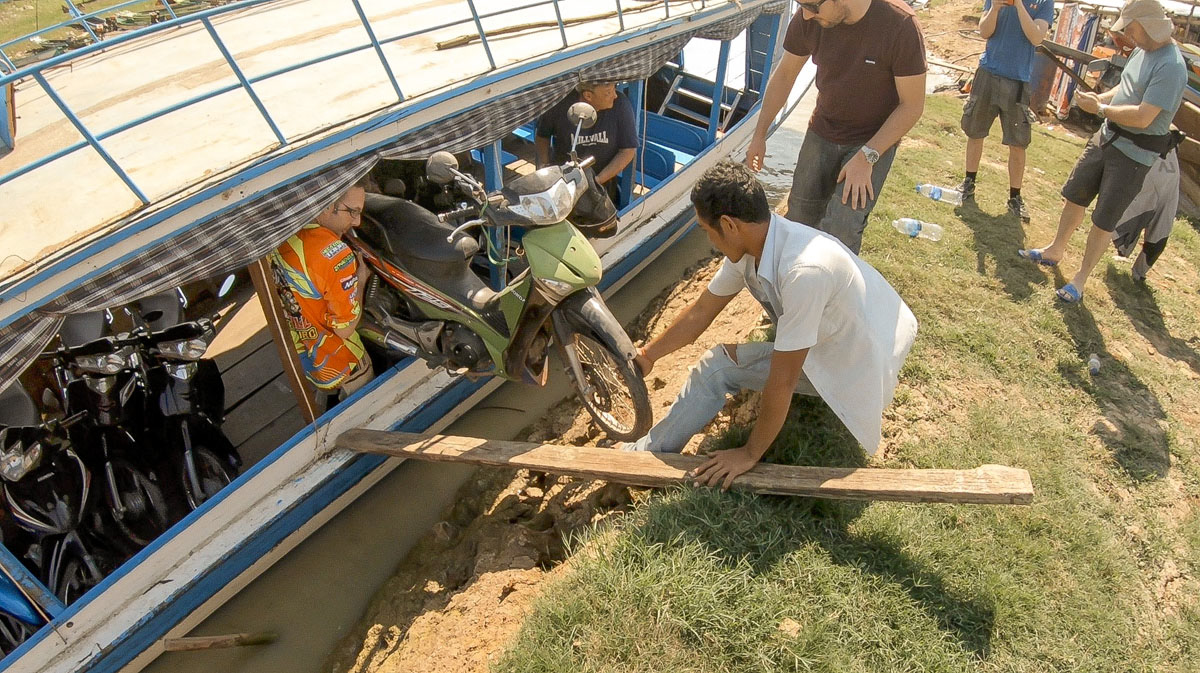
Eventually, the water level drops too low, and we’re stuck. We find ourselves in one of the strangest places I’ve seen. The air vibrates with loud techno music, and small, noisy boats without exhausts zip past. The riverbank is steep and muddy, and we have no idea how to unload. But the Cambodians are resourceful. With planks, ropes, and a few strong hands, we manage to get everything off the boat. I wasn’t too confident, but somehow it works.
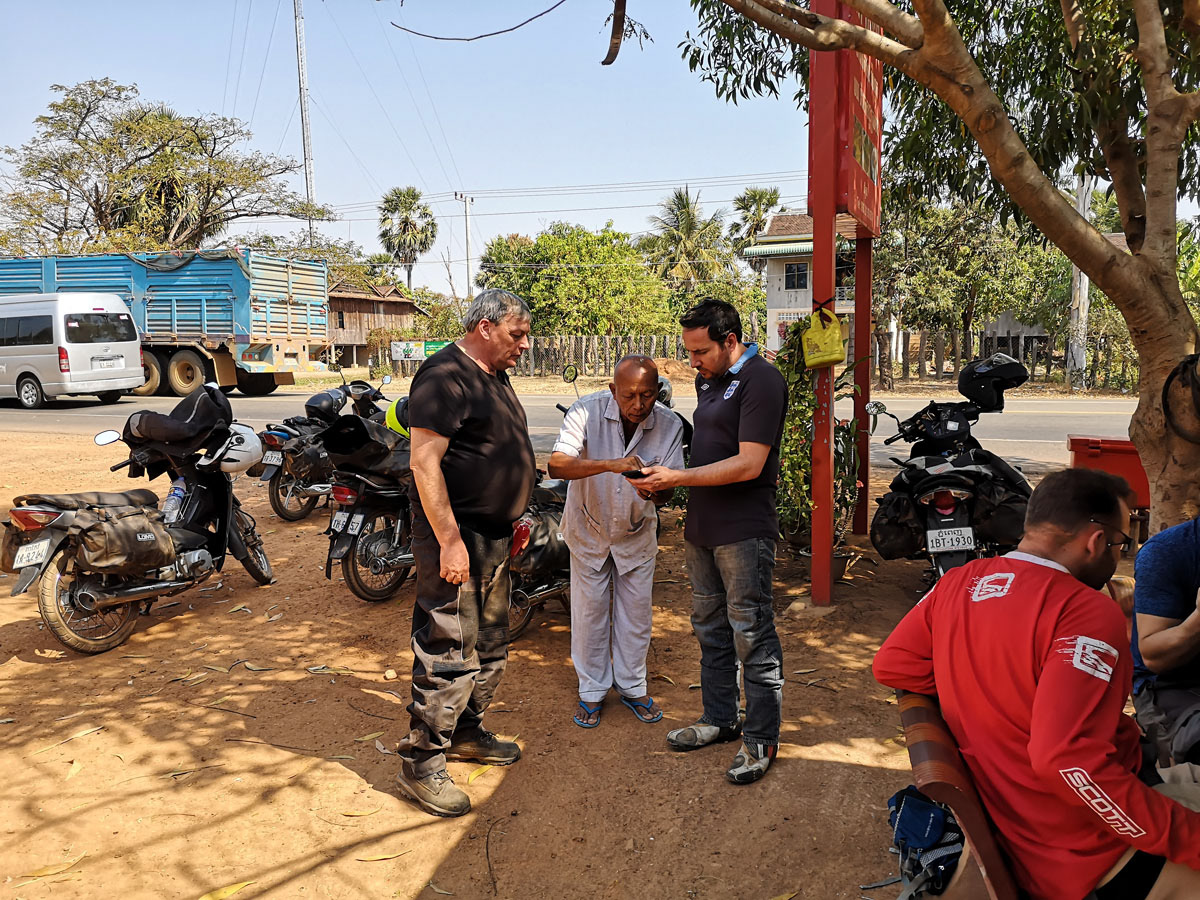
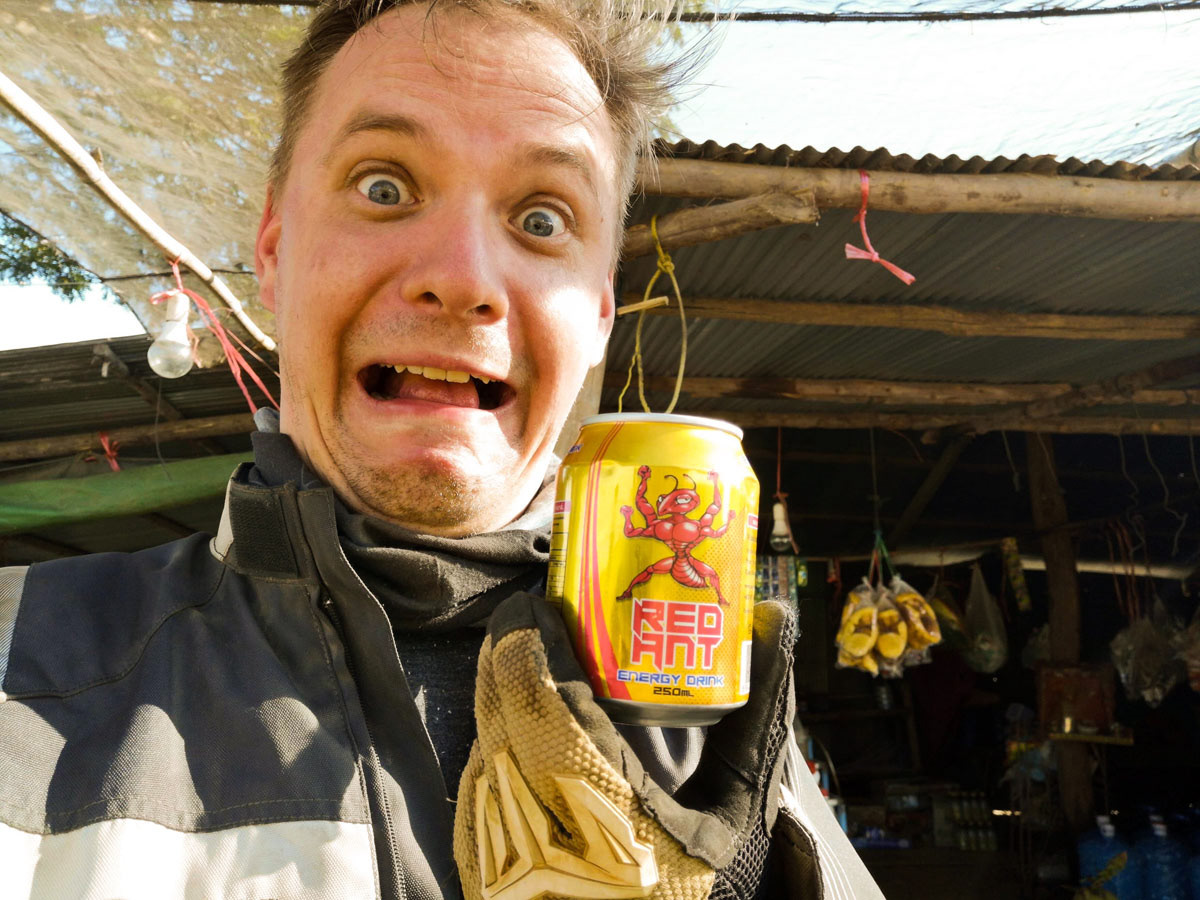
We press on through villages, fields, and paths until we find a small shop under a giant tree. We take a break, sipping Cambodian Red Bull and listening to the buzz of a moped speeding by with no exhaust. Is there such a thing as an exhaust in this country?
Just before sunset, we roll into Battambang. Our bikes are battered, and so are we. We pause to admire the famous bat cave, watching millions of bats take flight, soaring toward the setting sun. The sky is alive with motion, a perfect end to a strange, long day. We find a hotel, eat, and crash into bed, grateful for the day’s adventures.
Pursat & a Menu of Massage Ladies
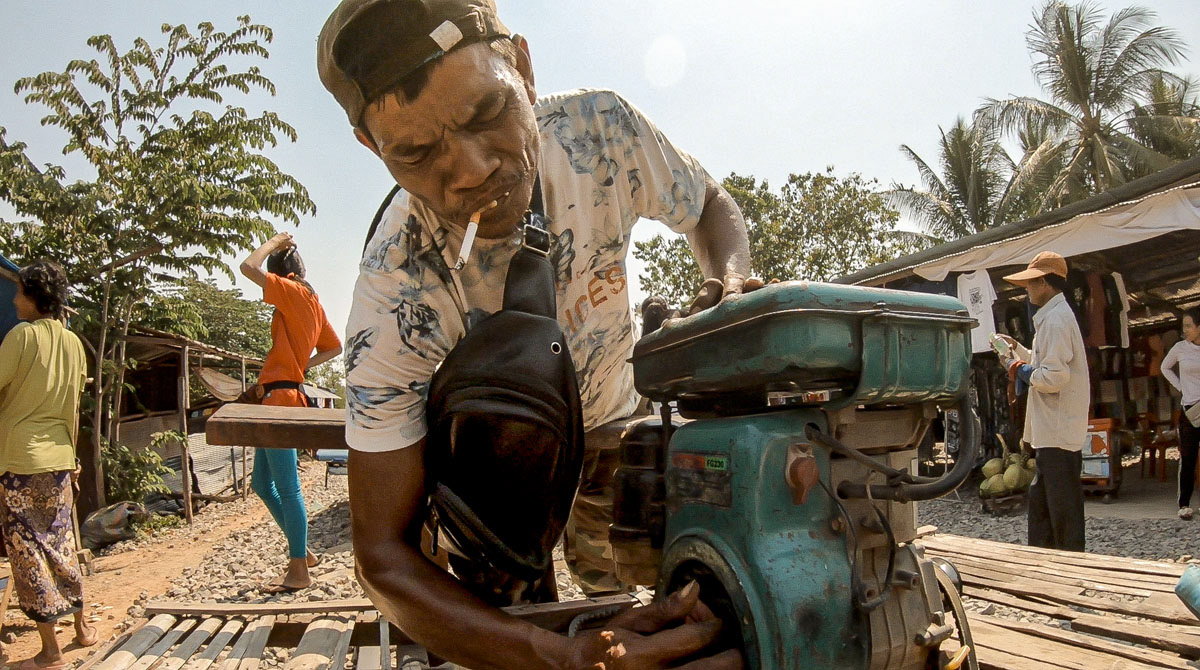
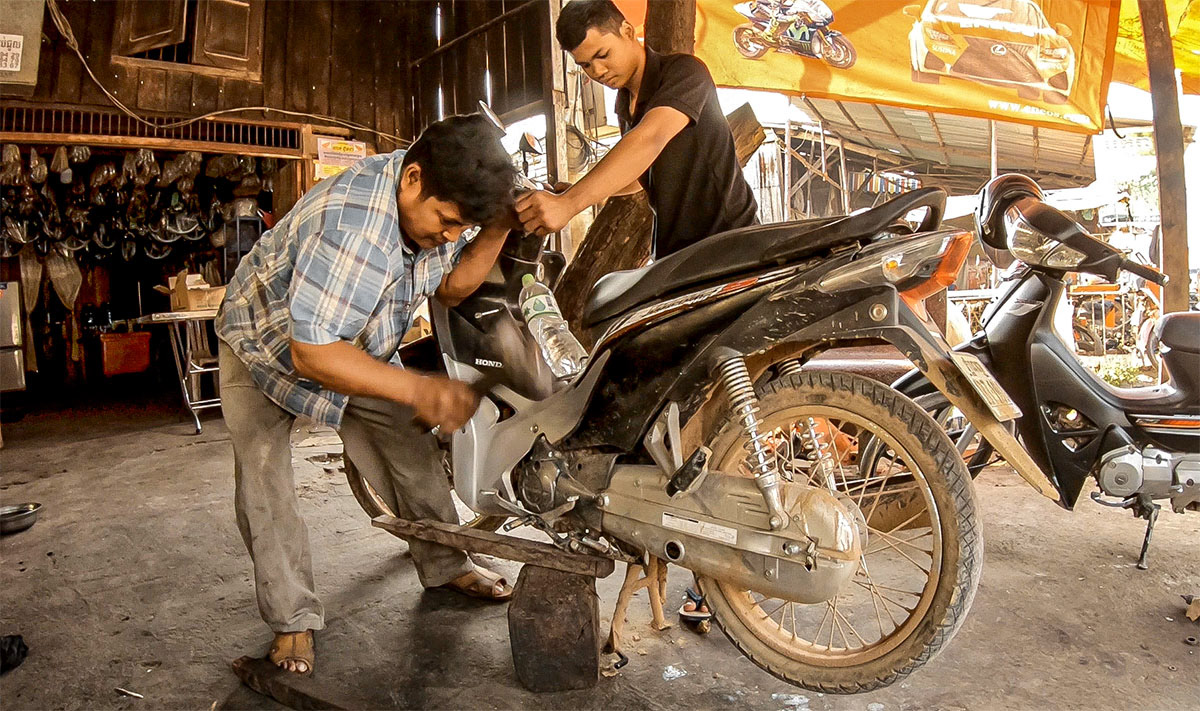
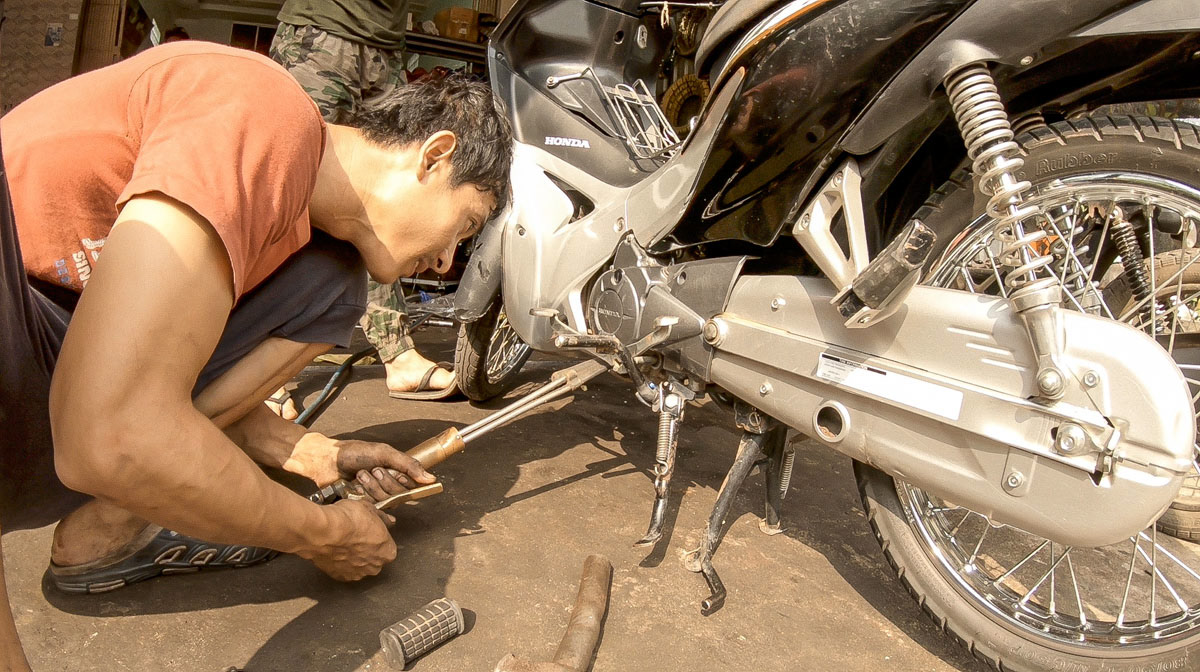
We repair our battered bikes, finding a mechanic who’s got the essentials—namely, a big hammer. He pounds away at my bike, and soon enough, the twisted footpeg is straight again. They’ve done this before, I can tell. It doesn’t take much—just the right tool and a good swing.
By midday, the heat’s unbearable. We make our way toward the Bamboo Train. Once a quirky, fun ride, now a fading tourist trap. We take it in briefly, but the magic is gone, and we don’t linger long. The train’s rusted tracks and squeaky wood just feel like a reminder of something lost.
Our next destination is Koh Kong, but it’s too far for a single day’s ride, with some notorious mountains lying between us. So we look for a place to rest for the night. Pursat—less a destination, more a waypoint. The roads are mostly bad asphalt, baking under the sun. The heat’s relentless. My bike, guzzling gas at four times the rate of everyone else’s, grows more frustrating with each kilometer. We stop just for fuel and a drink, the air thick with dust, offering the promise of relief that never quite comes.
The hotel’s a dump, run-down, with little more than the basics. There’s a flyer in the room, offering "massage girls." We shrug it off.
Dinner’s a letdown. We wait far too long for something that turns out to be tasteless, MSG-laden slop. Finding decent food is like finding an oasis here—rare and fleeting.
Red Dust in our Faces – The Cardamom Mountains
Shaking heads in Pursat. We ask about the Cardamom Mountains. Some say, “Impossible.” Others nod. We don’t know which to believe, but we’ve come this far. The mountains call. We leave Pursat behind. Ahead, only dust and a brutal climb.
The first stretch is dull, a slow prelude. Then, a break. A shack in a banana plantation. A roof, some walls, and an uncertain kitchen. We don’t know what we’re ordering, but we eat it anyway. Time slips away. We have none to spare.
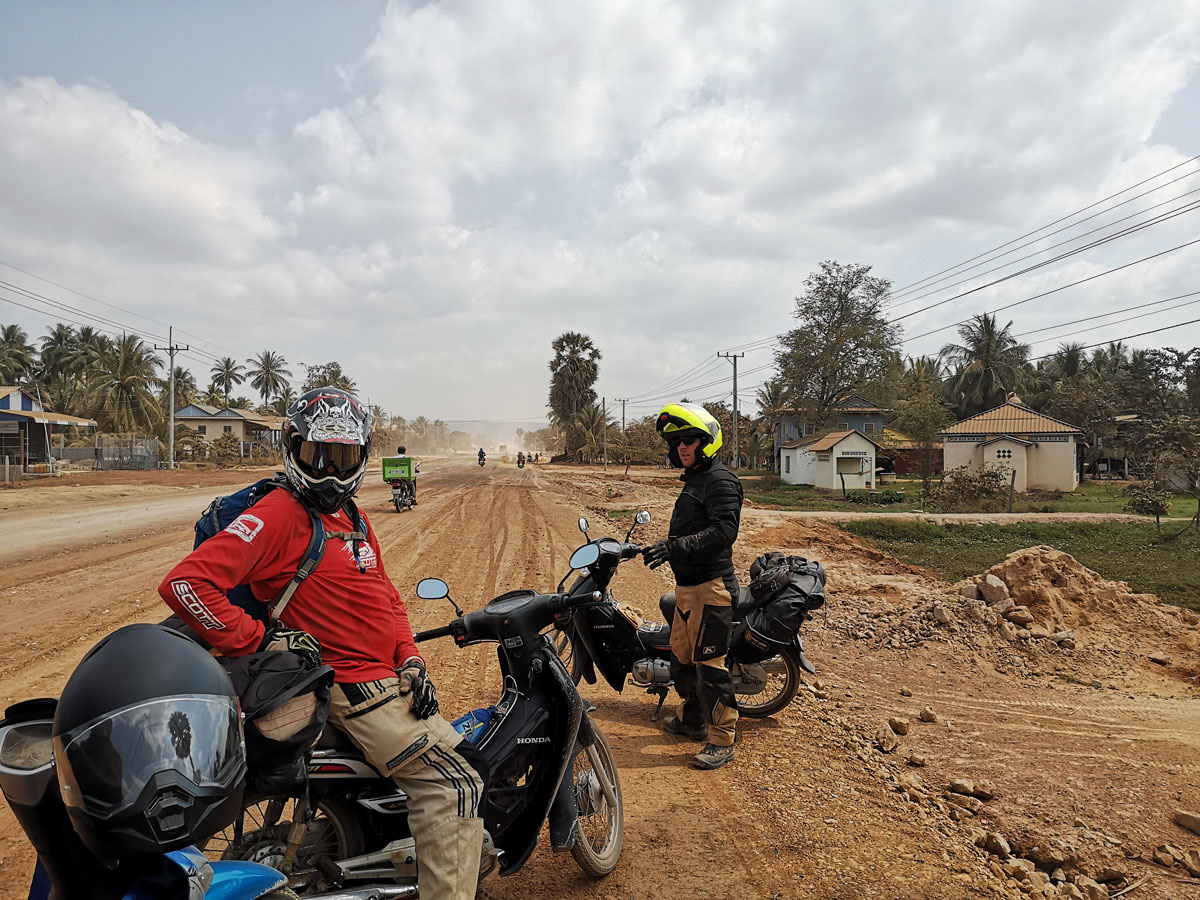
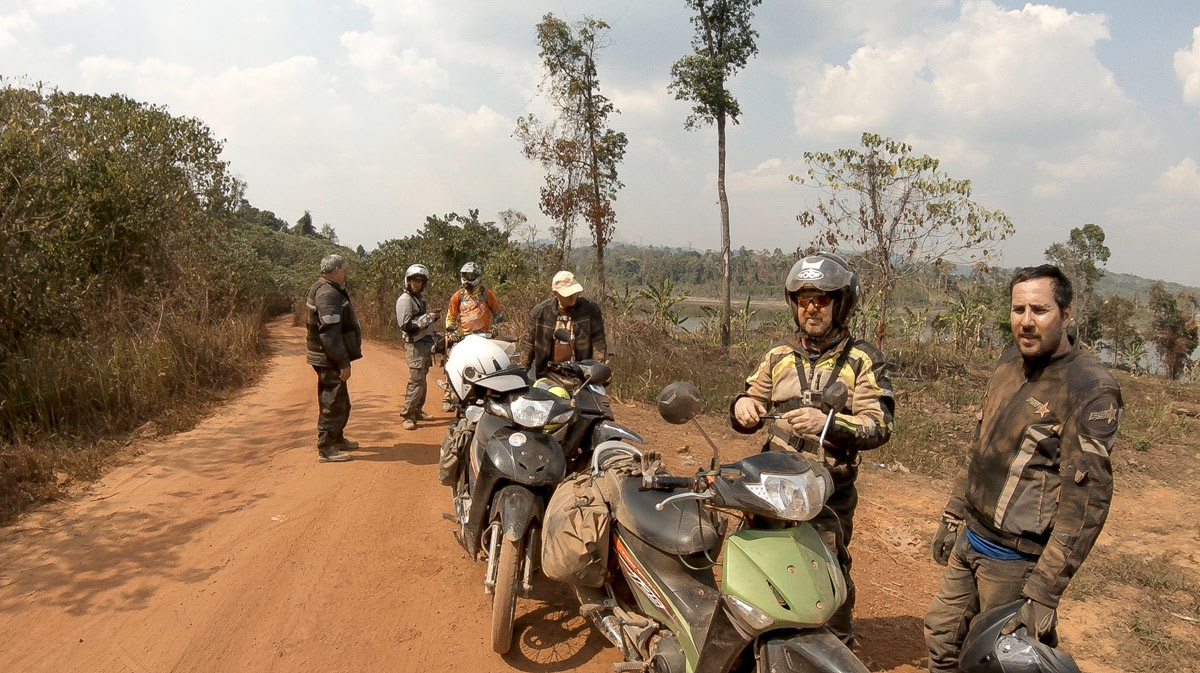
The mountains rise before us like a wall. 270 kilometers of washed-out tracks, deep ruts, dust, heat. Every kilometer a fight. The jungle presses in. Insects buzz. Sweat clings to our backs. The bikes groan under the weight, rattling, struggling. We push forward.
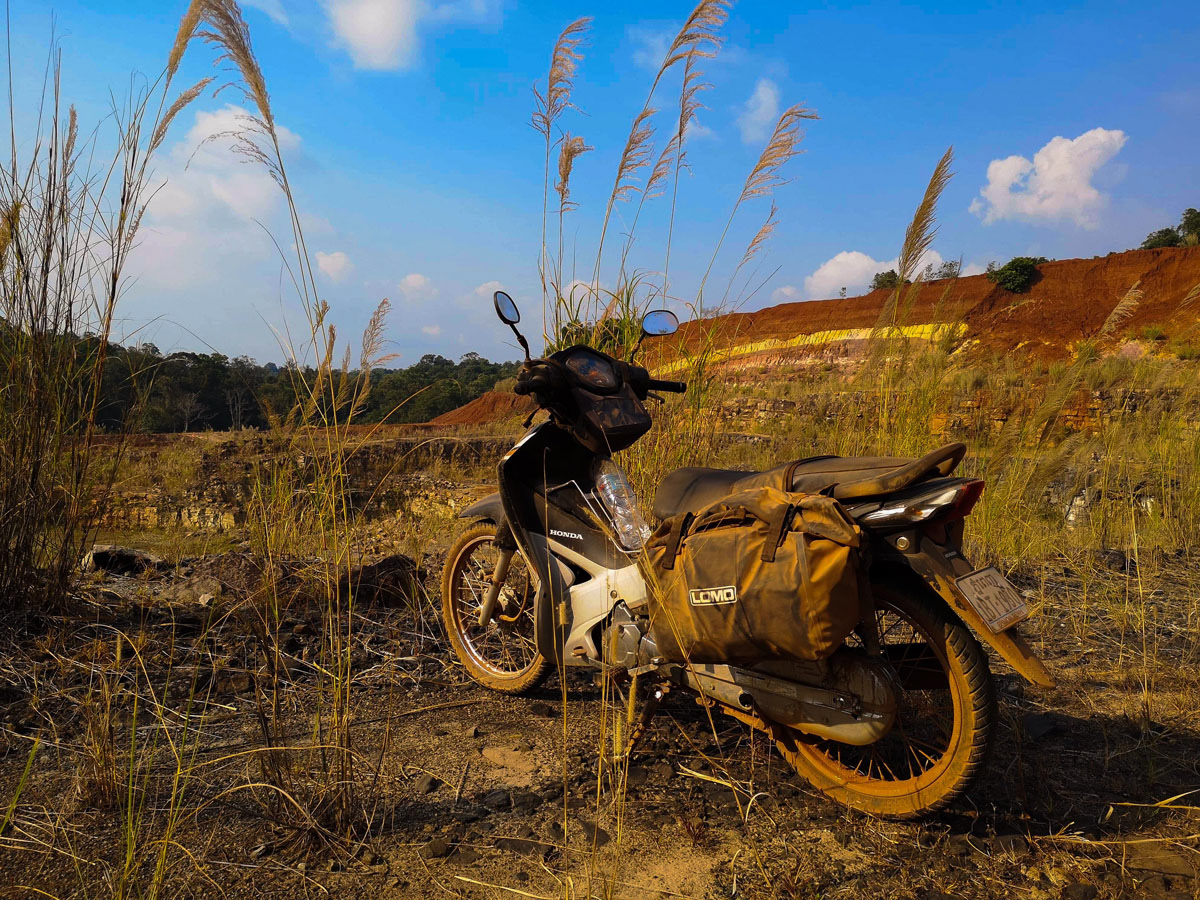
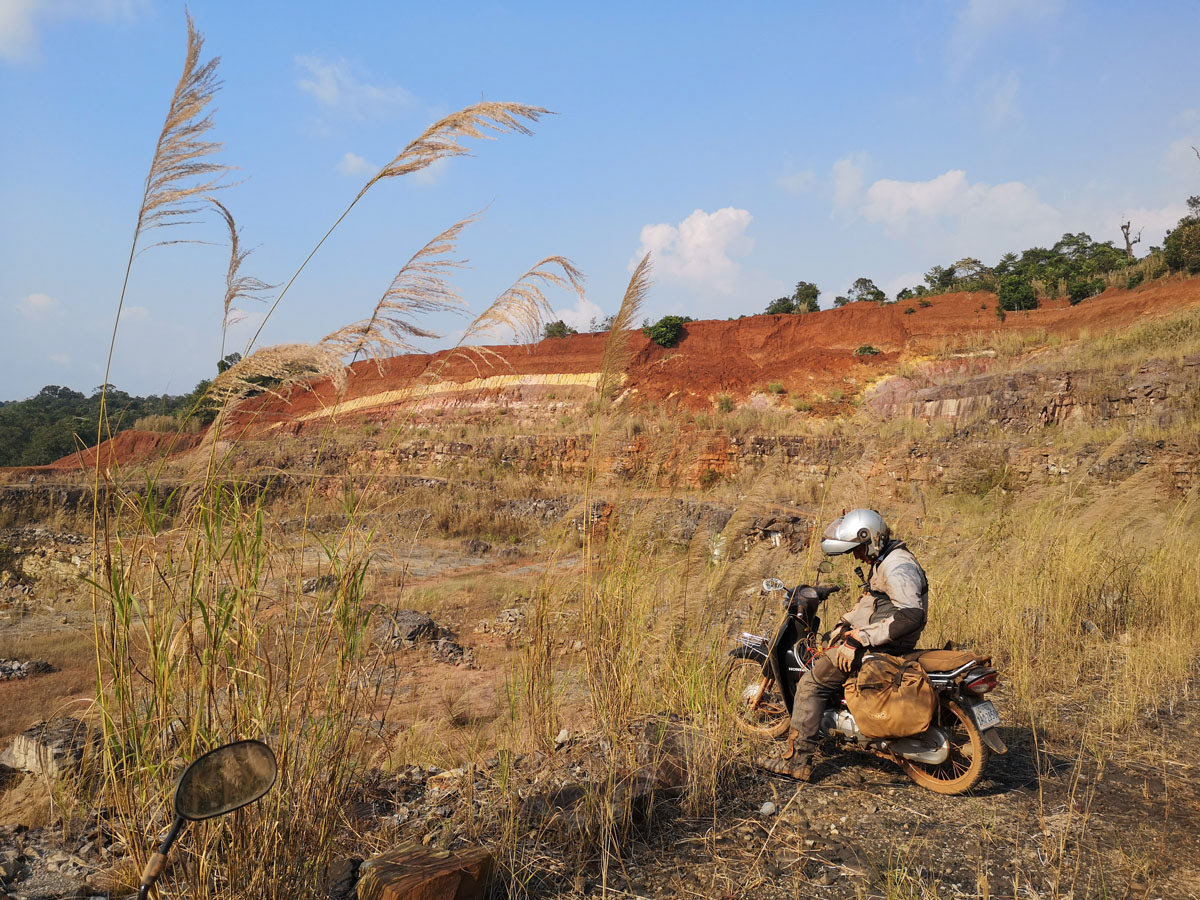
The trail is merciless. Loose gravel, deep holes, brutal inclines. One moment, we claw our way up. The next, we plunge down, dodging boulders, skidding through sand. The jungle swallows us. Red dust everywhere. Then, a hole. Too deep. My bike drops hard. The impact rattles through my bones.
On the other side, a moment of relief. A stop at an old mine. A waterfall, hidden in the landscape. Local couples linger, stealing time together. Seven dust-covered strangers arrive, sweat-soaked, exhausted. They smile at us. Maybe out of pity, maybe out of curiosity. We smile back. Then we move on.
Darkness comes too soon. The road turns to pavement, a brief salvation. But my tank is empty. I watch the needle drop, knowing I won’t make it. Running on fumes. The last stretch ahead. Then nothing. The bike dies beneath me. In a curve, I misjudge the road. I go down. Hard. My head slams against the ground. The helmet saves me. I’m shaken, sore, but I’m still here. The bike’s tank is finally empty.
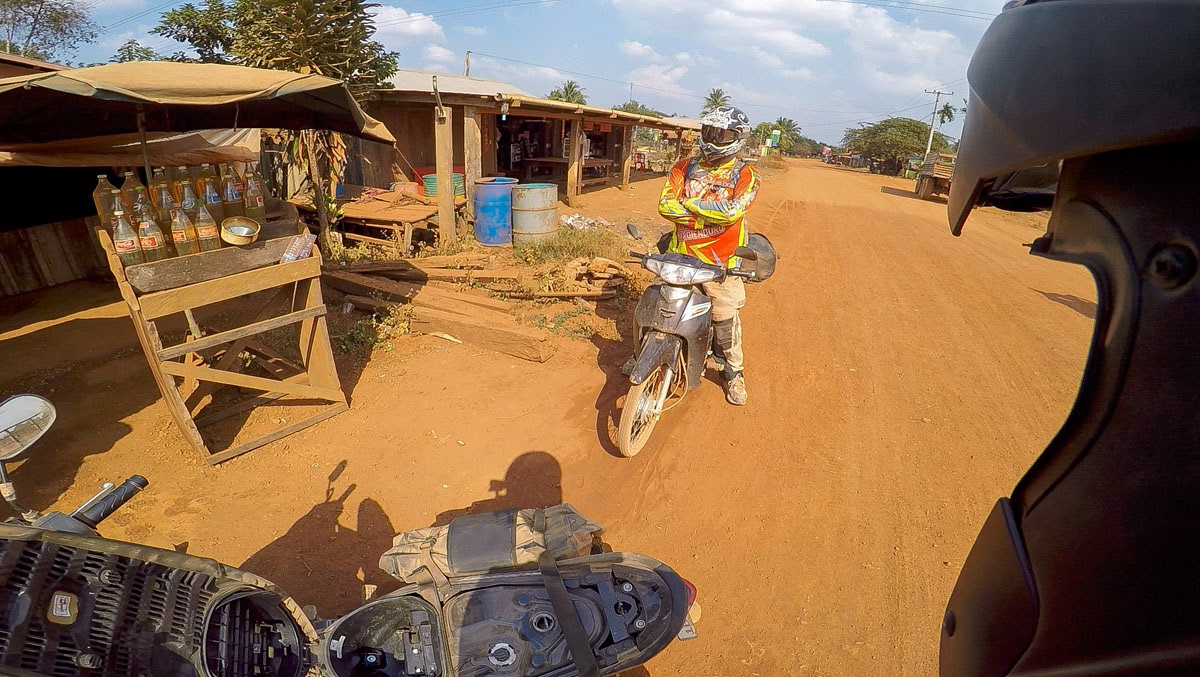
Ed pulls me. Kilometers of struggle, my dead bike tied to his. Just when we are ready to give up, a gas bottle appears from the shadows. A stranger. A quiet exchange. A miracle. We press on. Koh Kong waits.
Dead of night. Exhausted. Drained. But here we are.
Dinner at Fat Sam’s is a welcome relief—Schnitzel burgers, of all things. The food tastes like victory, but we are too tired to enjoy it. We sit in silence. The weight of the day pressing down. Tomorrow, the road calls again. But tonight, we rest.
The next day, we finally get a chance to breathe. A real breakfast at the Wood House. The first sense of normalcy in days. My bike is in desperate need of a wash, the dust and grime of the Cardamom Mountains clinging to every surface. We search for a mechanic, but luck’s not on our side. It’s Chinese New Year, and nearly everything’s closed.
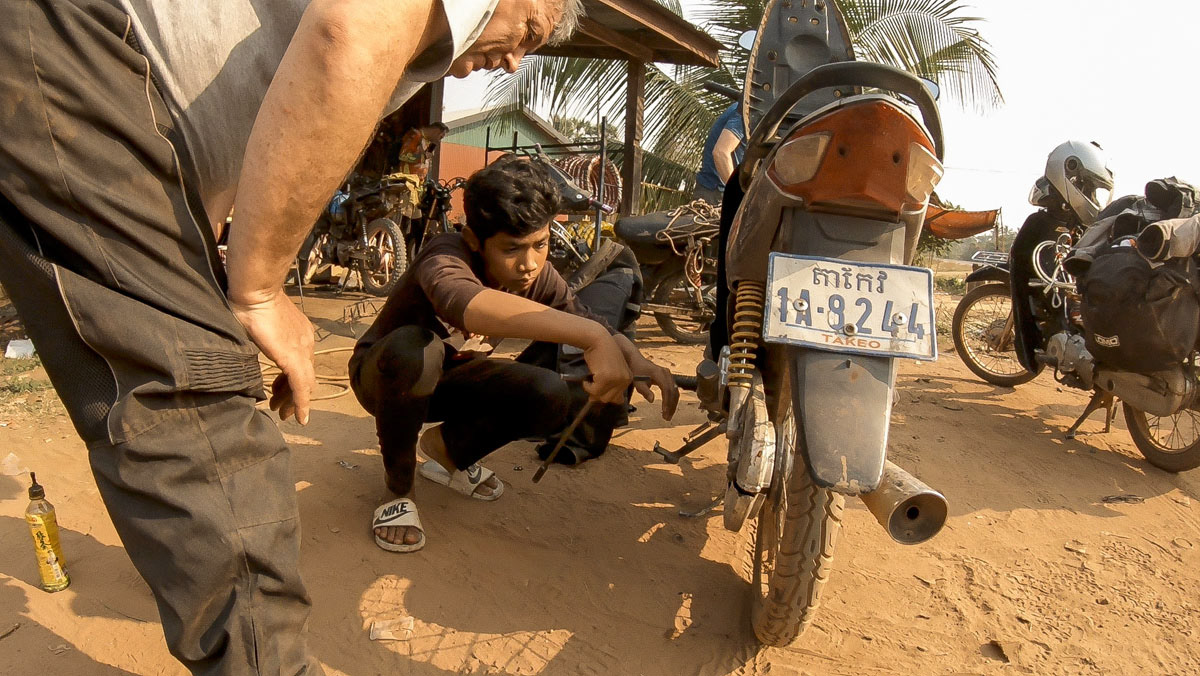
We don’t give up. By midday, a tip from a local leads us to a small shop. A young mechanic gets to work. Welding, hammering, straightening, tightening. Fast, precise. He refuses money for labor. Only for parts. Even those are cheap.
The bikes are ready. The road stretches ahead. The journey isn’t over. Not yet.
An island Refuge during Chinese New Year
We pack up, throw our bags on the bikes, and roll out toward Sihanoukville. The road is smooth, fresh asphalt cutting through deep green forests. A sudden downpour. Should we stop for rain gear? Probably not. We ride through endless, eerie palm oil plantations, rows upon rows of mutilated trees, their remains piled high on filthy trucks. A black diesel cloud follows them, choking the air as they roll by, leaving a grim mark on the landscape.
The closer we get to the city, the worse the traffic. Trucks barrel toward us, overtaking with no regard for anything in their path. We weave through, throttle open, eating up the miles.
The closer we get to the city, the worse the traffic. Trucks barrel toward us, overtaking with no regard for anything in their path. We weave through, throttle open, eating up the miles.
Sihanoukville is exactly what we were warned about. A wasteland of half-finished buildings, dust, open pits, and reeking streets. Chinese casinos lined up like soldiers, flashing neon against crumbling sidewalks. We don’t stay long. New plan—take a ferry to Koh Rong.
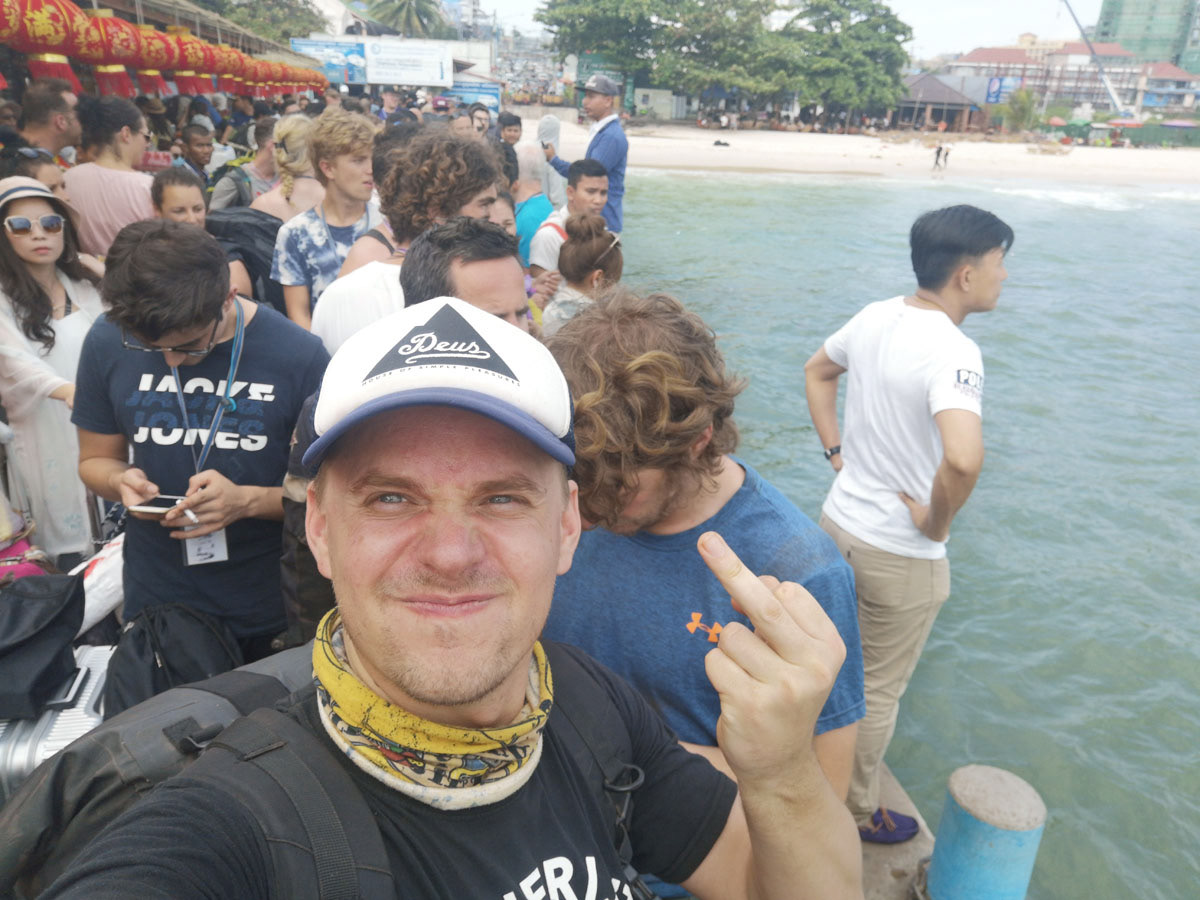
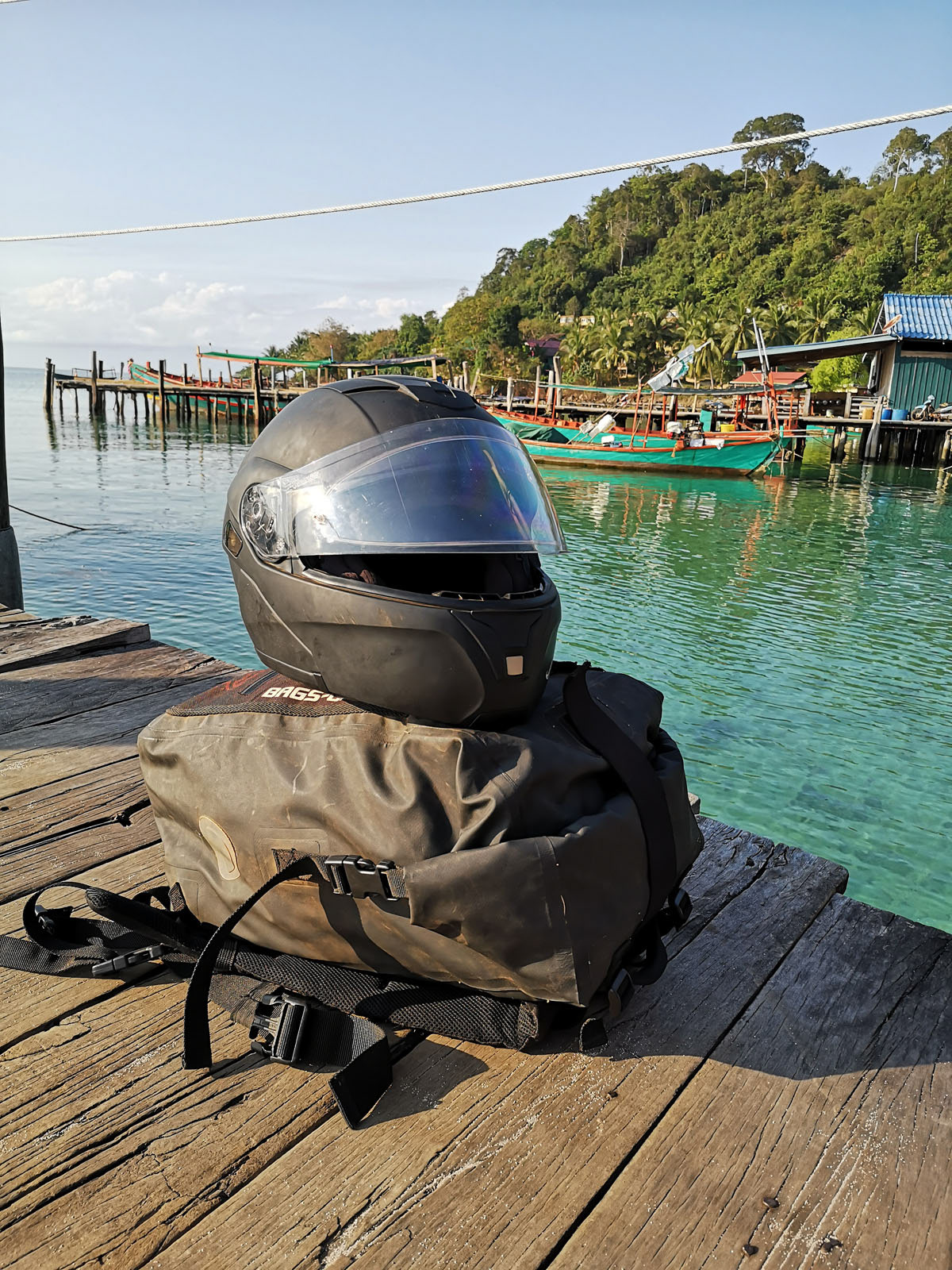
We park the bikes, grab our saddlebags, and push through the chaos of the pier. It’s Chinese New Year, and the crowd is thick with locals and tourists, all scrambling for a spot on the boats. The noise is deafening. People shouting, luggage thudding, waves slapping against the pier. I’m surprised no one falls into the water.
When we finally board, the ferry takes us to the wrong beach. Of course. We’ve already booked a place to stay, but reaching it turns into a whole new ordeal. When we finally stumble onto our stretch of sand, we find out our rooms are long gone. Fully booked. No space. I’m already picturing a night under the stars, so I order a drink and start preparing for the worst.
Somehow, we manage to scrape together four beds for seven sweaty, dust-covered men. We draw straws. I get lucky—my own bed for the night.
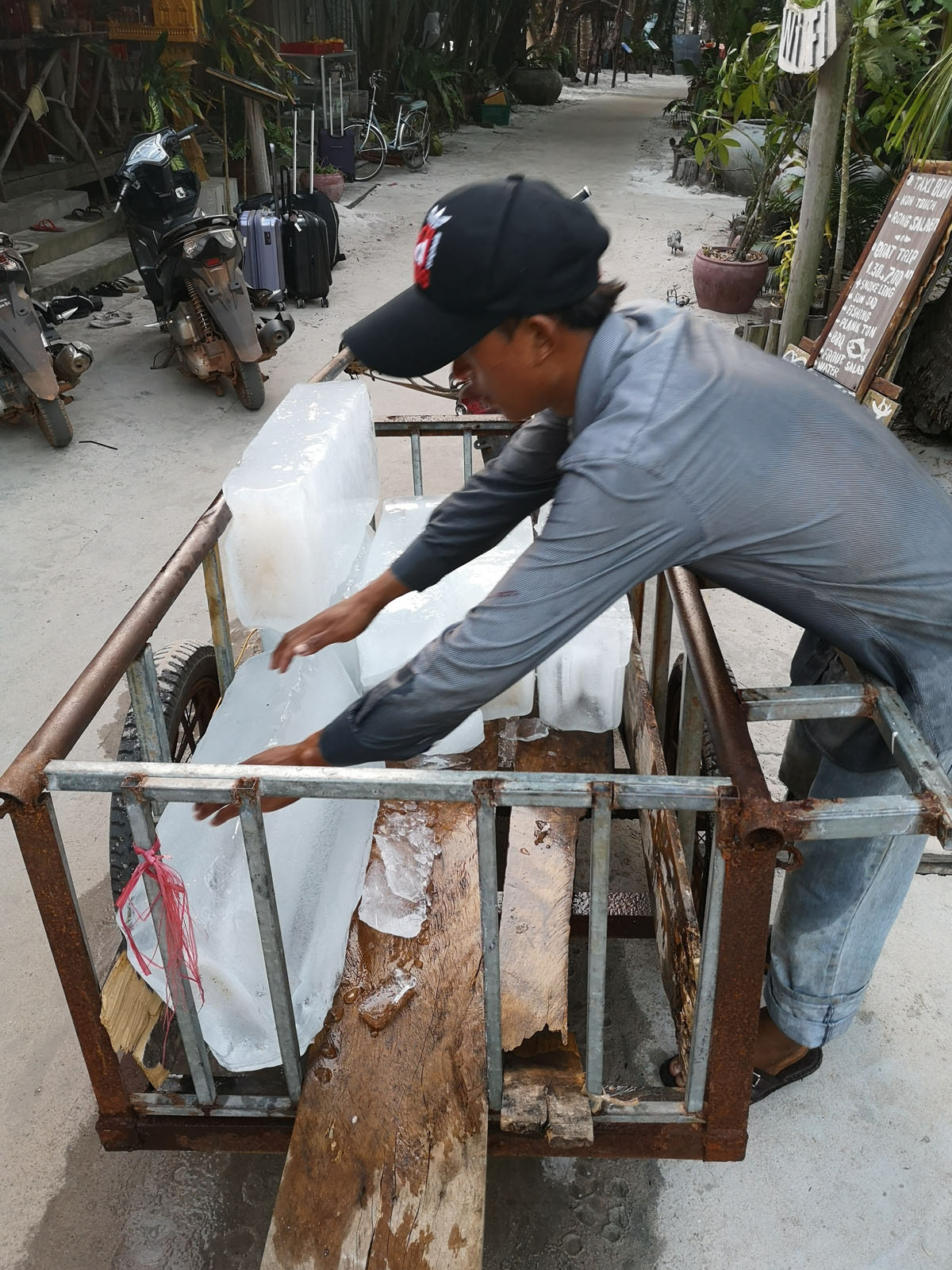
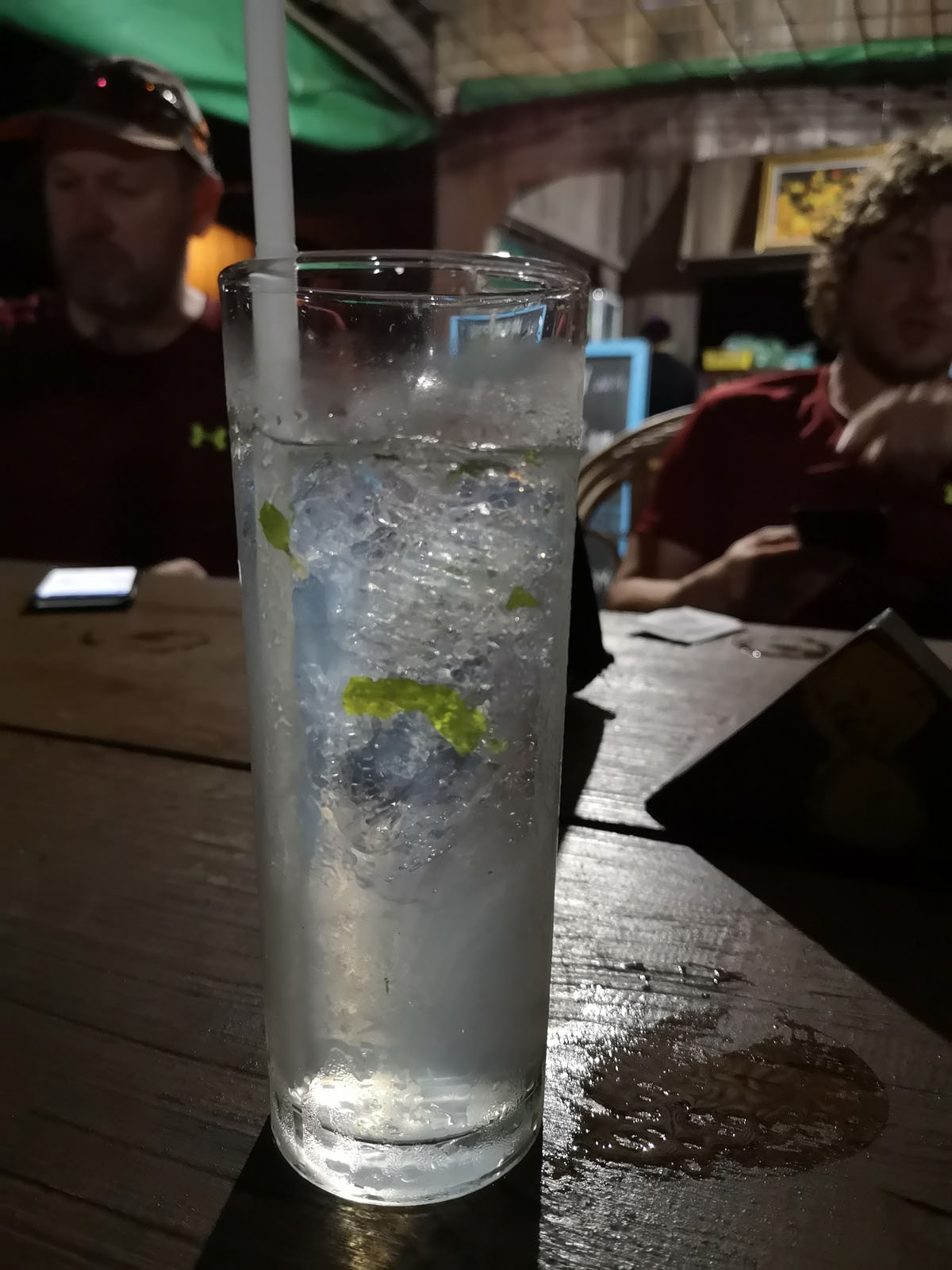
There’s no power. No running water. The next day, we do nothing. Beach, cold beer, gin and tonics. Ice hacked straight off a massive block sitting in the sand. I expect food poisoning, but I get lucky again.
We eat pizza. The locals offer a “happy” version. My British friends are thrilled. I know good Italian pizza. This is not it. Grappa makes it bearable.
At night, I finally wash off the sweat and dust with a bucket of water.
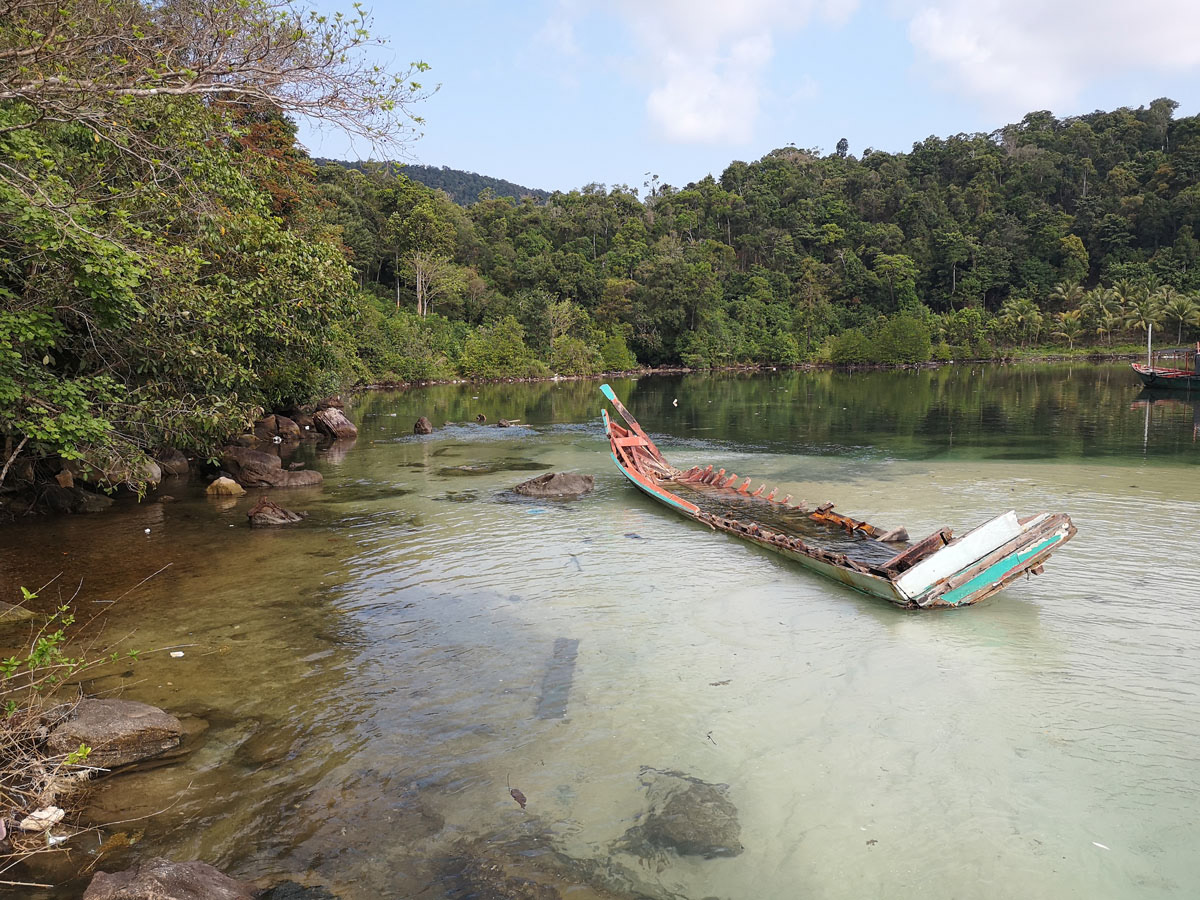
The sunburn sets in, a steady sting across my skin. I float in the sea, watch hipstery travellers fish plastic from the waves, knowing full well the locals will dump it back in on the other side of the island.
Where the Pepper grows
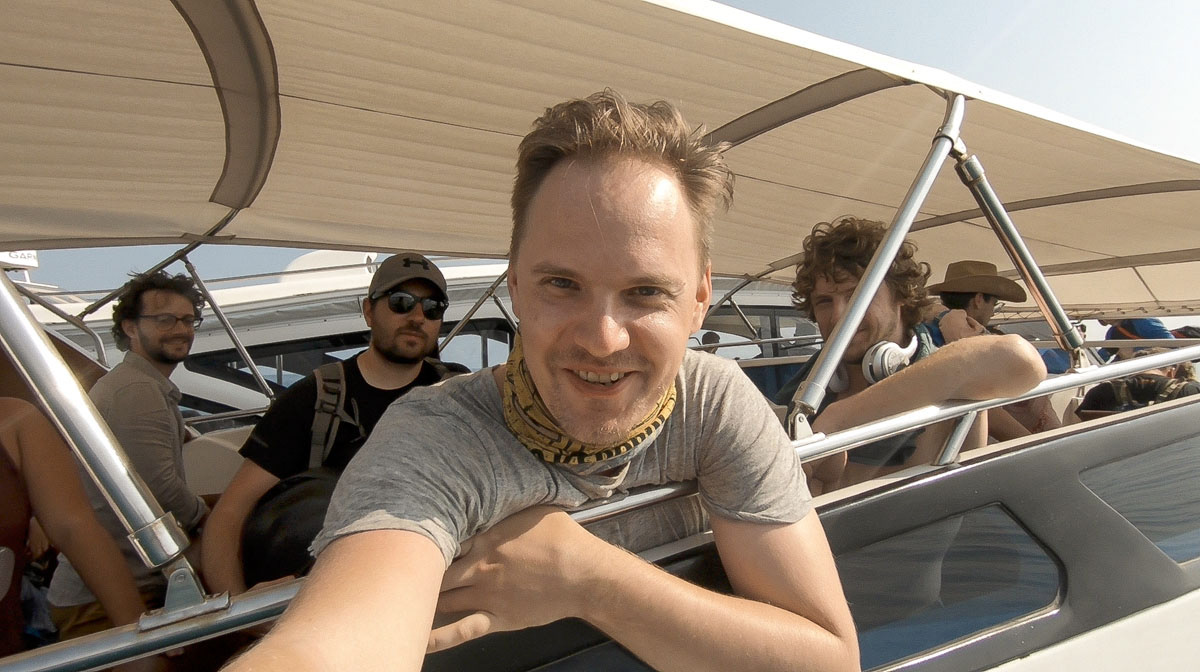
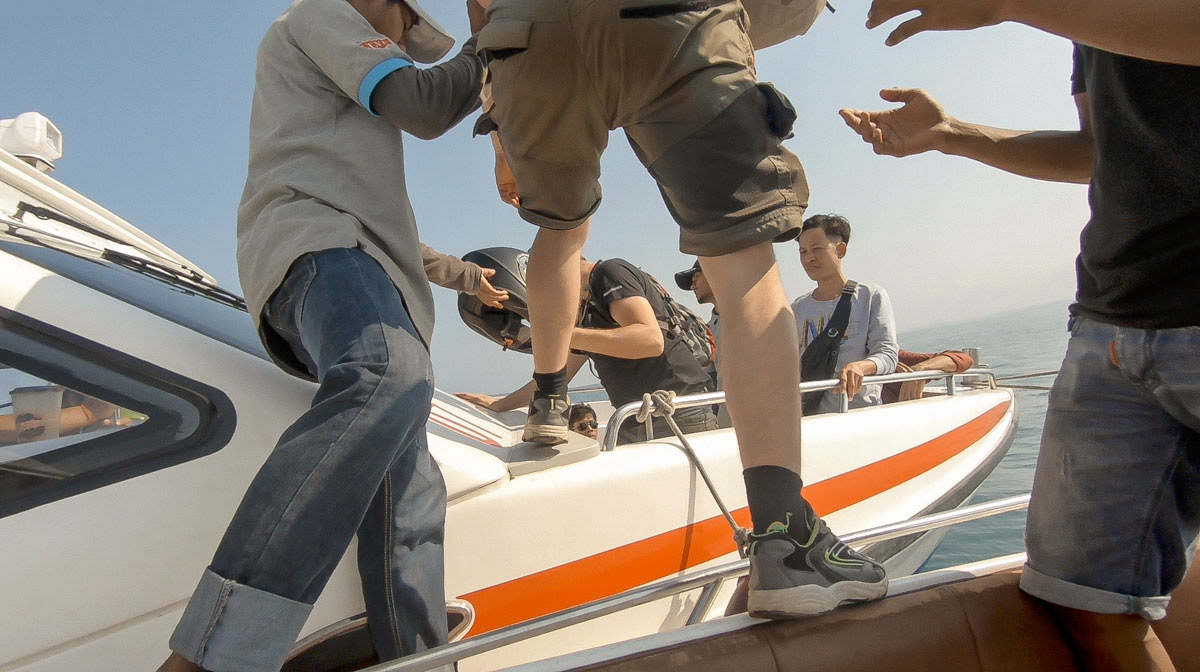
We’re done with island life. At 8:30, the plan is to take a taxi boat back to the mainland. Halfway there, the engine fails. We’re stuck. Another boat pulls up to rescue us, but it’s already packed to the brim, and we’re not exactly welcomed. We climb from boat to boat, gripping our gear, hoping nothing falls into the water. At least this time, there are no flames licking at the sides of the boat.
We make it back to Sihanoukville, and our bikes are still there, waiting for us. We’re hungry, craving breakfast. The city greets us with its ugliness—one of the most repulsive places I’ve seen. We push on toward Kampot, the city where the pepper grows. The traffic is a suicide mission, but we keep going. The rest of the ride goes smoothly, aside from the sudden appearance of potholes. Just before Kampot, we take a detour into Bokor National Park, a much-needed oasis. Smooth roads, stunning views, and for the first time in a while, the ride feels real again. When the fog rolls in up here, everything is submerged in a hazy soup, and the remnants of days gone by take on a ghostly, eerie feel. At the top, we stumble upon a ghost town—an entire city built and abandoned. We find a Chinese restaurant amid the ruins. I’m cautious and stick to vegetables. It turns out to be a wise decision—everyone else gets sick, all six of them.
On the mountain roads, I can’t help but feel for the tourists trying their hand at mopeds for the first time. They’re struggling, but we speed past, savoring the freedom of the road. By late afternoon, we reach Kampot, dusty and tired again. It’s another tourist trap, crowded with people in too little clothing, stumbling over their mopeds through the chaos. I feel for them, hoping they don’t crash.
Dinner is at a massive restaurant. Everywhere, people talk about “Happy Pizza.” One of us can’t resist. I don’t get it. But other than that, Kampot feels like a ghost town. Nothing but the strange hum of tourists and the suffocating heat.
Epiloge – Phnom Penh
Phnom Penh. I am on the rooftop of my fancy hotel, the one I splurged on for the last few days. A gin and tonic in hand, I talk with a fellow traveler from Austria. After the long ride, after everything, I feel I’ve earned this quiet moment. Today was the last ride with the guys. We left Kampot at 10:30, pushed through the chaos, and made it straight to Phnom Penh. The roads were brutal, the traffic hellish. I can’t wait for proper road rules, insurance, and roadworthy checks. Anything but the madness we’ve been through. The roads swallow you whole, deep holes that threaten to eat your bike. Trucks shedding rocks that come at you like missiles. Dust storms so thick they could drive you off the edge.
But through all that, we stuck together. We shared the dust and the grit, the sweat and the grime. The adventure was raw, and every mile carried the scent of fuel and earth. Our bikes howled through the mess, and even when it seemed like the roads would break us, we kept pushing. Together.
I drop the bike off, and for the next two days, I wander Phnom Penh. After all the riding, the dirt, the heat, the city feels strange. Like the end of something—though I know the road never really ends. In a few days, I’ll fly back to Vienna, where winter’s cold will hit me like a slap. But already, my mind is on the next road. Nepal. Another journey, another horizon.
Then the talk of a strange virus in China. It seems distant, far away. But in the weeks that follow, the borders close. Flights are canceled. And suddenly, the world shuts down. We’re all stuck at home, and I’m left with nothing but memories of the road.